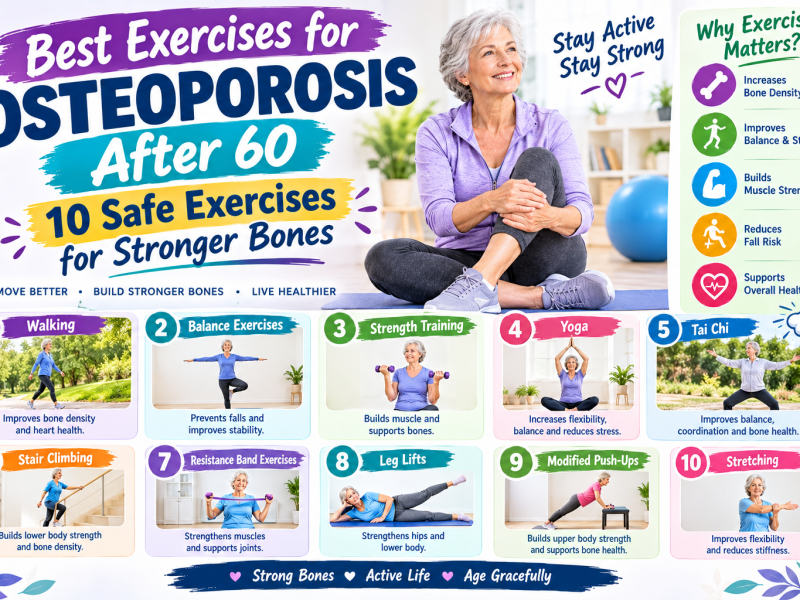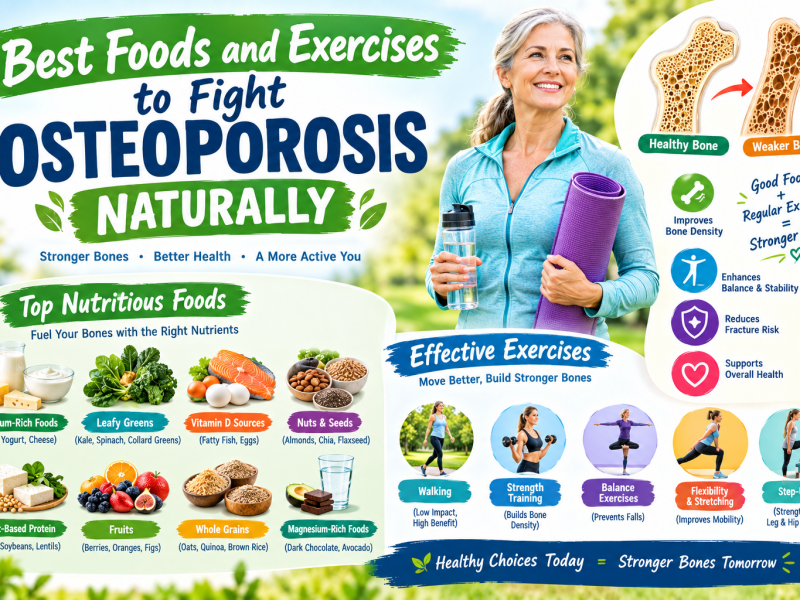
Osteoporosis can make bones weaker and more vulnerable to fractures, but having low bone density does not mean you should stop exercising. In fact, the right type of physical activity can help support bone strength, improve muscle function, enhance balance, and reduce the risk of falls.
For beginners, however, choosing the right osteoporosis exercise program is important. Some movements can place unnecessary stress on fragile bones, particularly exercises involving forceful bending, twisting, or high-impact movements.
The goal is not to exercise as hard as possible. Instead, a safe osteoporosis exercise program should combine weight-bearing activity, resistance exercises, balance training, and posture-focused movements at an appropriate level.
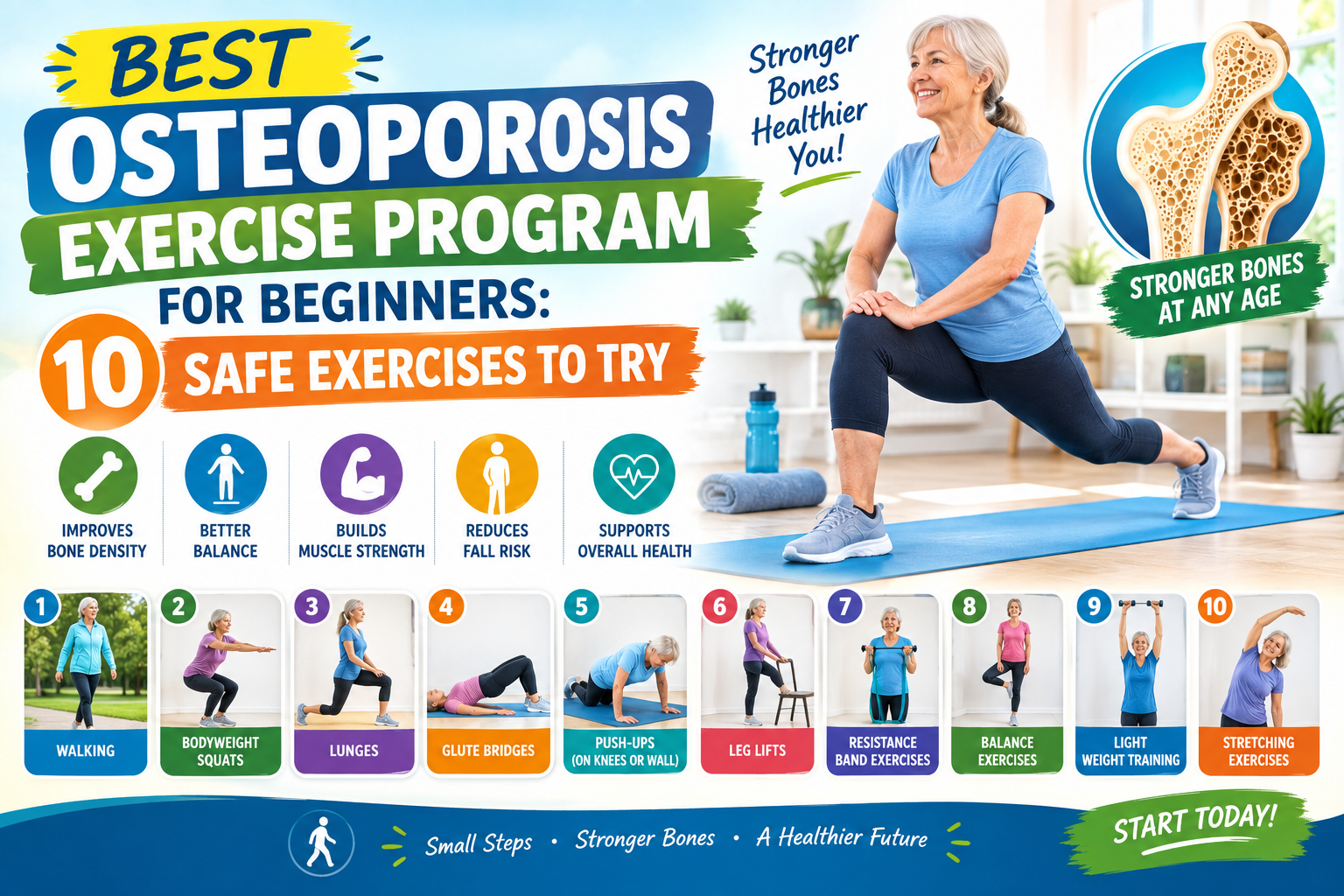
Below are 10 safe exercises that beginners can consider when building an osteoporosis-friendly workout routine.
Why Exercise Matters for Osteoporosis

Click Here To Watch Video to Treat Osteoporosis Disease Naturally!..
Bones are living tissues that respond to physical stress. Regular weight-bearing and resistance activities can provide the mechanical stimulus that helps maintain bone strength.
Exercise can also benefit osteoporosis in several other ways. Stronger muscles can improve stability and make everyday activities easier. Better balance may reduce the likelihood of falls, which is especially important because falls are a major cause of fractures in older adults.
A regular exercise routine may help:
- Support bone strength
- Improve muscle strength
- Improve balance and coordination
- Support better posture
- Maintain mobility and independence
- Reduce fall risk
- Improve overall physical fitness
Exercise does not replace medical treatment for osteoporosis when medication is recommended. Instead, it can be an important part of an overall bone-health plan.
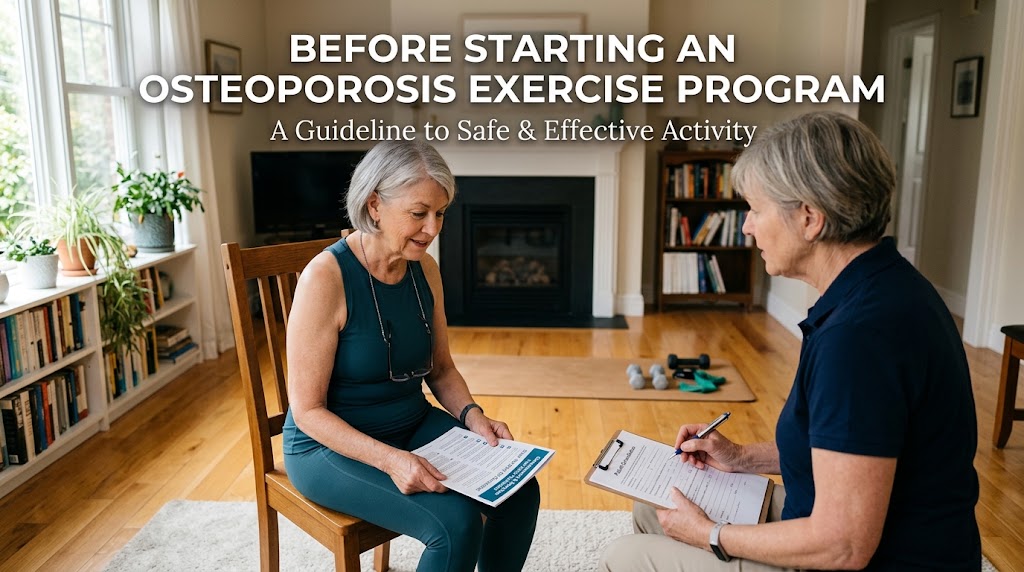
Before Starting an Osteoporosis Exercise Program
Click Here To Watch Video to Treat Osteoporosis Disease Naturally!..
If you have been diagnosed with osteoporosis, especially if you have already experienced a fracture, talk with your doctor or physical therapist before beginning a new exercise routine.
Your exercise program may need to be modified based on your bone density, fracture history, age, fitness level, medications, balance, and other health conditions.
Beginners should also start slowly. You do not need to complete all 10 exercises during your first workout. Start with a few movements that feel comfortable and gradually increase the duration or repetitions.
Stop exercising and seek professional advice if you experience unusual or significant pain, dizziness, chest pain, or other concerning symptoms.
10 Safe Osteoporosis Exercises for Beginners

Click Here To Watch Video to Treat Osteoporosis Disease Naturally!..
1. Walking
Walking is one of the simplest ways to add weight-bearing activity to your routine.
When you walk, your legs support your body weight, providing a type of mechanical loading that can help support bone health. Walking also strengthens the muscles of the legs and can improve cardiovascular fitness.
How to start:
- Begin with 10–15 minutes at a comfortable pace.
- Keep your posture upright.
- Look ahead rather than constantly looking down.
- Swing your arms naturally.
- Gradually work toward longer walks as your fitness improves.
If balance is a concern, choose a flat, familiar surface and avoid uneven or slippery areas.
Walking may not be enough by itself to improve bone density substantially, but it can be an excellent foundation for a broader osteoporosis exercise program.
2. Sit-to-Stand Exercise
The sit-to-stand exercise is a simple functional movement that strengthens the thighs, hips, and buttocks.
It also mimics an everyday activity: getting up from a chair.
How to do it:
- Sit toward the front of a sturdy chair.
- Place your feet approximately hip-width apart.
- Lean forward slightly while keeping your back relatively straight.
- Push through your feet and stand up.
- Slowly lower yourself back into the chair.
- Repeat 8–10 times.
Use your hands on the chair or armrests for support if necessary.
As you become stronger, try performing the movement with less assistance.
3. Wall Push-Ups
Wall push-ups provide a beginner-friendly way to strengthen the chest, shoulders, and arms.
Unlike traditional floor push-ups, wall push-ups place less demand on the body and are easier to control.
How to do them:
- Stand facing a wall.
- Place your hands against the wall at approximately shoulder height.
- Step your feet slightly backward.
- Keep your body in a straight line.
- Slowly bend your elbows and bring your chest toward the wall.
- Push gently away from the wall.
- Repeat 8–12 times.
Keep your movements slow and controlled.
Resistance exercises such as this can help maintain muscle strength, which is valuable for mobility and fall prevention.
4. Heel Raises
Heel raises strengthen the calf muscles and can also challenge your balance.
How to perform heel raises:
- Stand behind a sturdy chair or near a countertop.
- Hold the support lightly.
- Slowly raise your heels so you are standing on your toes.
- Pause briefly.
- Slowly lower your heels.
- Repeat 10–15 times.
Avoid bouncing or moving quickly.
If your balance is good and your healthcare professional says it is appropriate, you can gradually reduce how much you rely on the support.
5. Step-Ups
Step-ups can strengthen the legs and hips while also practicing a movement used in everyday life.
Use a low, stable step rather than a high platform.
How to do step-ups:
- Stand in front of a sturdy step.
- Place one foot firmly on the step.
- Push through that foot to bring the other foot up.
- Step back down carefully.
- Alternate legs.
- Start with 5–10 repetitions per side.
Always use a handrail or stable support if needed.
Do not perform step-ups on an unstable surface.
6. Resistance-Band Exercises
Resistance bands can be useful for beginners because they allow you to strengthen different muscle groups without requiring heavy weights.
One simple option is a seated or standing row.
How to perform a resistance-band row:
- Secure the band according to the manufacturer’s instructions.
- Hold the handles or ends comfortably.
- Keep your shoulders relaxed.
- Pull the band toward your body while gently bringing your shoulder blades together.
- Slowly return to the starting position.
- Repeat 8–12 times.
Resistance exercises should feel challenging but controlled. Start with light resistance and gradually increase it as your strength improves.
A physical therapist or qualified exercise professional can help select appropriate resistance and technique.
7. Standing Leg Lifts
Standing leg lifts can strengthen the muscles around the hips and improve lower-body stability.
How to do them:
- Stand behind a sturdy chair.
- Hold the chair lightly.
- Keep your torso upright.
- Slowly move one leg out to the side.
- Avoid leaning your body.
- Return the leg to the starting position.
- Repeat 8–12 times.
- Switch sides.
Strong hip muscles can contribute to better stability and functional movement.
Keep the movement small and controlled rather than swinging your leg.
8. Balance Exercises
Balance training is an important component of an osteoporosis exercise program because preventing falls is one of the best ways to reduce fracture risk.
A simple beginner exercise is standing with your feet close together while holding a sturdy support.
How to practice:
- Stand near a countertop or sturdy chair.
- Place your feet close together.
- Stand upright and look forward.
- Hold the position for 10–20 seconds.
- Repeat several times.
As your balance improves, a healthcare professional may recommend more challenging variations.
Never practice difficult balance exercises near stairs, sharp furniture, or other hazards.
9. Posture Exercises
Osteoporosis can sometimes be associated with changes in posture, particularly when vertebral fractures have occurred.
Posture exercises can help strengthen muscles that support an upright position.
One simple exercise is a gentle shoulder-blade squeeze.
How to do it:
- Sit or stand upright.
- Keep your shoulders relaxed.
- Gently draw your shoulder blades backward and slightly downward.
- Hold for a few seconds.
- Relax.
- Repeat 8–10 times.
Avoid forcing your shoulders backward or arching your lower back.
If you have spinal fractures or significant spinal curvature, ask a healthcare professional which posture exercises are appropriate for you.
10. Low-Impact Aerobic Exercise
Low-impact aerobic activities can improve endurance and general fitness while being easier on the joints than high-impact exercise.
Depending on your fitness level and medical advice, options may include:
- Brisk walking
- Low-impact aerobics
- Elliptical exercise
- Stationary cycling
- Other supervised cardiovascular activities
Remember that not every cardiovascular exercise provides the same bone-loading benefit. Cycling and swimming, for example, are excellent for cardiovascular fitness but are not weight-bearing in the same way as walking.
For osteoporosis, aerobic activity is often best combined with resistance and balance exercises.
A Simple Beginner Osteoporosis Exercise Program

Click Here To Watch Video to Treat Osteoporosis Disease Naturally!..
You do not need to exercise for hours to create a useful routine.
A beginner schedule could look like this:
Monday: Strength + Balance
- Sit-to-stand: 8–10 repetitions
- Wall push-ups: 8–12 repetitions
- Heel raises: 10–15 repetitions
- Standing leg lifts: 8–12 per side
- Balance practice: 10–20 seconds several times
Tuesday: Walking
Take a comfortable 15–30 minute walk, depending on your fitness level.
Wednesday: Rest or Gentle Activity
Allow your muscles to recover. Gentle movement can help prevent excessive inactivity.
Thursday: Strength + Posture
Repeat several strength exercises and include shoulder-blade squeezes.
Friday: Walking or Low-Impact Activity
Perform 15–30 minutes of comfortable aerobic activity.
Saturday: Strength + Balance
Repeat selected resistance and balance exercises.
Sunday: Rest
Use this day for recovery and preparation for the following week.
This is only an example. Your ideal schedule may be different depending on your health, fitness, fracture history, and healthcare professional’s recommendations.
Exercises to Avoid or Modify With Osteoporosis
Click Here To Watch Video to Treat Osteoporosis Disease Naturally!..
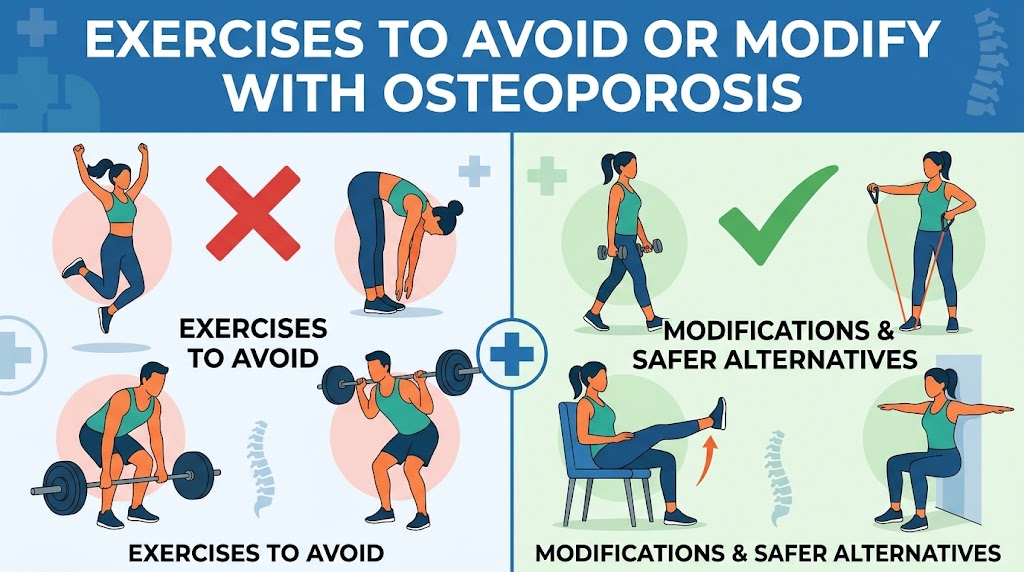
Having osteoporosis does not mean every exercise is dangerous. However, certain movements may need to be avoided or modified, particularly if you have spinal osteoporosis or previous vertebral fractures.
Be cautious with:
- Forceful forward bending of the spine
- Repeated sit-ups or crunches
- Strong twisting movements
- High-impact activities that are inappropriate for your fitness or fracture risk
- Sudden, jerking movements
- Heavy lifting without proper technique
- Exercises that significantly increase your risk of falling
Yoga and Pilates are not automatically unsafe, but some positions involve deep spinal flexion or twisting. Tell your instructor about your osteoporosis and ask for modifications.
The safest exercise program is one that matches your individual risk level.
Tips for Exercising Safely With Osteoporosis
Click Here To Watch Video to Treat Osteoporosis Disease Naturally!..
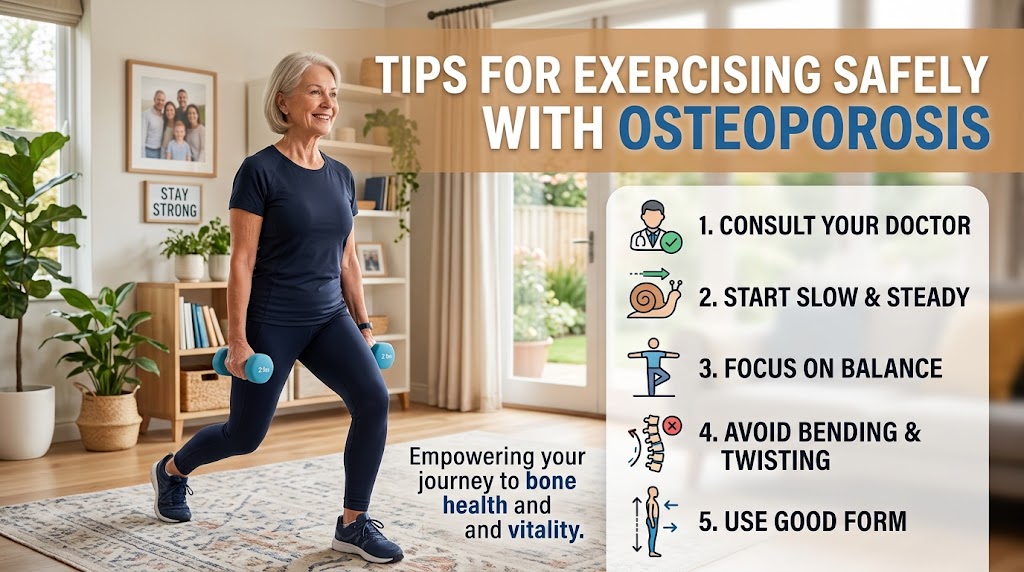
Follow these simple principles when beginning your exercise routine:
Warm up first
Spend several minutes walking slowly or performing gentle movements before resistance exercises.
Focus on technique
Good form is generally more important than the number of repetitions or amount of resistance.
Progress gradually
Increase exercise duration, repetitions, or resistance slowly rather than making large changes.
Use support when necessary
If balance is uncertain, exercise near a sturdy support.
Wear appropriate footwear
Choose comfortable, supportive shoes with good traction.
Listen to your body
Muscle fatigue can be normal, but sharp, severe, or unusual pain should not be ignored.
Make exercise consistent
Regular activity is more useful than exercising intensely once in a while.
When Should You Get Professional Guidance?
Click Here To Watch Video to Treat Osteoporosis Disease Naturally!..
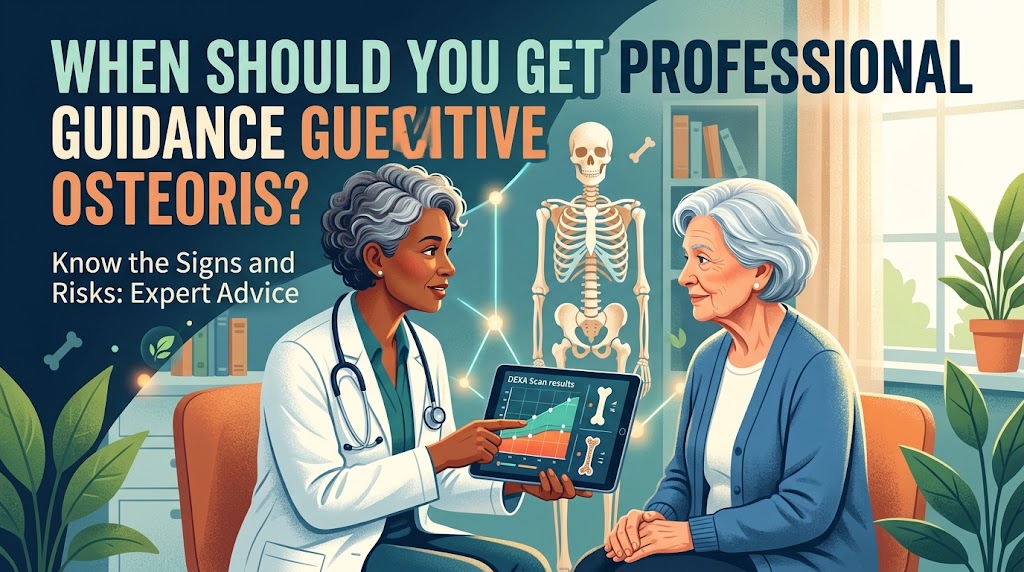
A personalized exercise program can be especially helpful if you have:
- A history of osteoporosis-related fractures
- Vertebral compression fractures
- Significant height loss or posture changes
- Severe osteoporosis
- Frequent falls or poor balance
- Significant back pain
- Other medical conditions affecting movement
A physical therapist or qualified healthcare professional can assess your movement and recommend exercises that match your abilities and fracture risk.
The Bottom Line
The best osteoporosis exercise program for beginners is not necessarily the most intense one. A safe routine should focus on gradual, controlled movements that support muscle strength, balance, posture, mobility, and appropriate weight-bearing activity.
Walking, sit-to-stands, wall push-ups, heel raises, step-ups, resistance-band exercises, leg lifts, balance training, posture exercises, and low-impact aerobic activity can all be useful components of a beginner routine.
Start slowly, prioritize proper technique, and make changes gradually. Most importantly, if you have osteoporosis or a history of fractures, discuss your exercise plans with your healthcare professional before beginning a new program.
Exercise is one part of bone health. Adequate nutrition, vitamin D, calcium when appropriate, fall prevention, healthy lifestyle habits, and prescribed osteoporosis treatment may also be important.
Medical Disclaimer: This article is for general educational purposes and is not a substitute for individualized medical advice, diagnosis, or treatment. People with osteoporosis—especially those with previous fractures or severe bone loss—should consult a doctor or qualified physical therapist before starting or changing an exercise program.