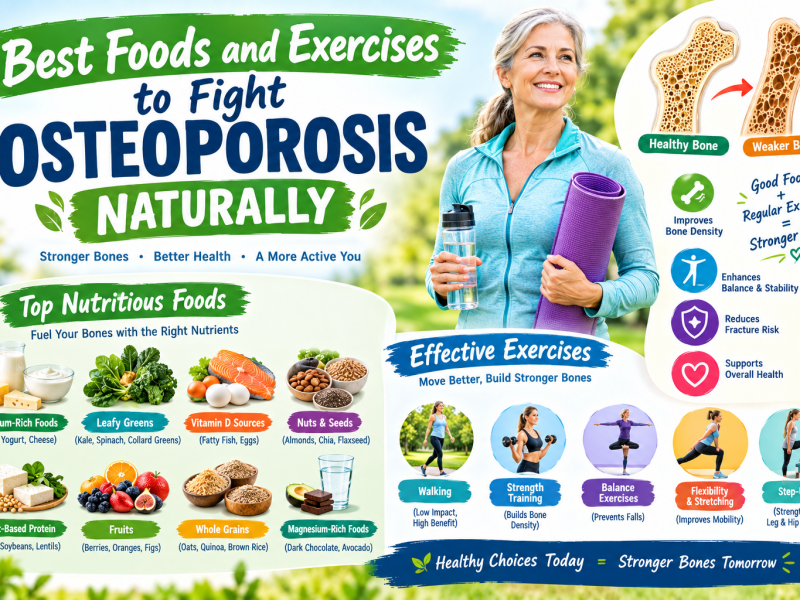
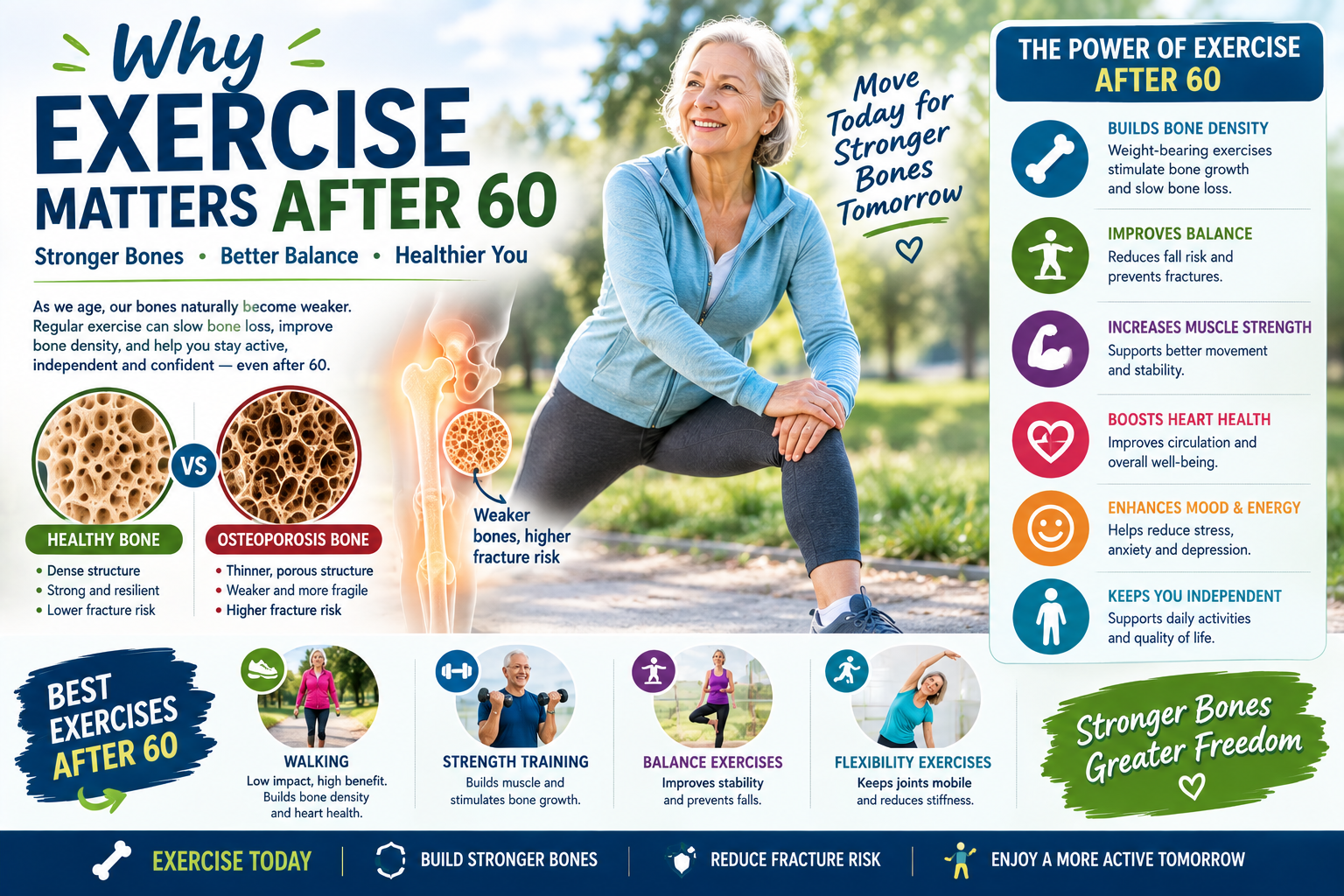
Staying physically active becomes increasingly important as we get older, especially when it comes to protecting bone health. After 60, natural changes in bone density, muscle strength, balance, and mobility can increase the risk of osteoporosis and fractures. The good news is that appropriate exercise can help support stronger bones, maintain muscle, improve balance, and make everyday activities easier.
If you have osteoporosis, however, exercise should be selected carefully. Some movements may place excessive stress on weakened bones, particularly the spine. The goal is not to exercise as hard as possible but to exercise safely, consistently, and appropriately for your fitness and bone health.
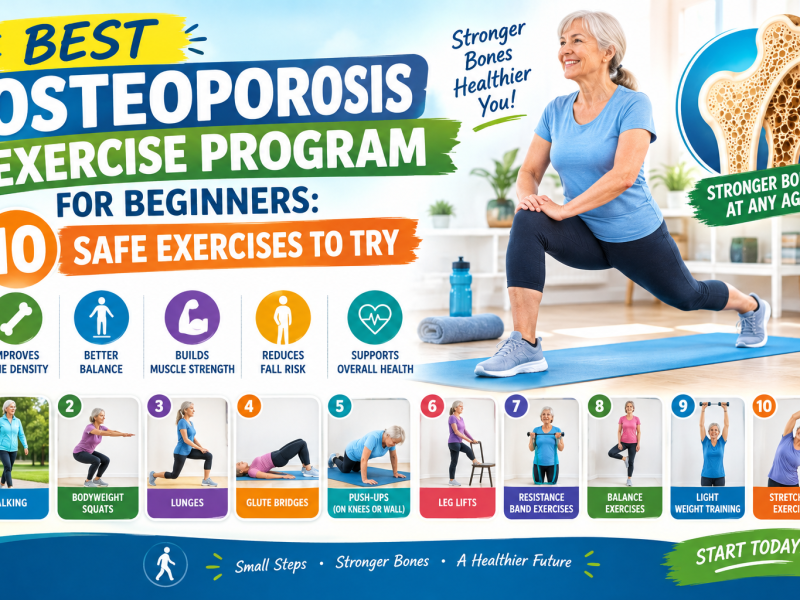
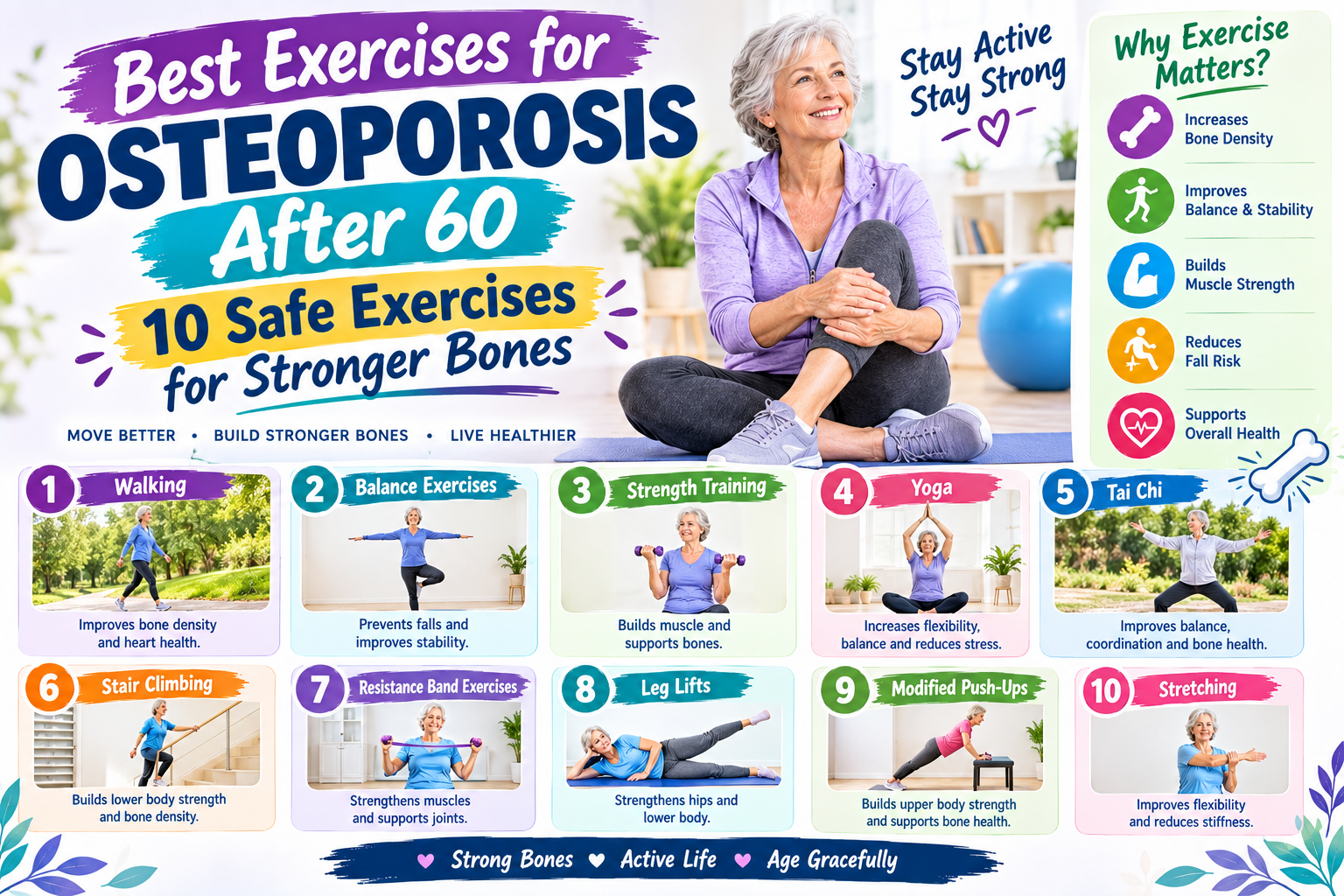
This guide explains 10 exercises that may be suitable for many adults over 60, along with safety tips and a simple weekly routine.
Important: If you have osteoporosis, previous fractures, severe back pain, significant balance problems, or other medical conditions, speak with your healthcare professional or a qualified physical therapist before starting a new exercise program.
Why Exercise Matters After 60
Click Here To Watch Video to Treat Osteoporosis Disease Naturally!..
Bones are living tissues that respond to mechanical loading. Appropriate physical activity can help maintain bone strength and support the muscles that protect joints and bones.
Exercise can also provide benefits beyond bone density. Regular movement may help improve:
- Muscle strength
- Balance and coordination
- Posture
- Flexibility and mobility
- Confidence with everyday activities
- Physical independence
- Fall prevention
For someone with osteoporosis, preventing falls is particularly important because a fall can result in a serious fracture.
A balanced exercise program generally includes weight-bearing activity, resistance training, balance exercises, and posture-focused movements.
10 Safe Exercises for Osteoporosis After 60

Click Here To Watch Video to Treat Osteoporosis Disease Naturally!..
1. Walking
Walking is one of the simplest ways to stay active after 60.
Regular walking is a weight-bearing activity, meaning your body works against gravity while you are upright. It can help maintain physical fitness and strengthen the muscles used for everyday movement.
Start with a comfortable pace and gradually increase your duration as your fitness improves.
How to do it safely
- Wear supportive, comfortable shoes.
- Walk on a stable, well-lit surface.
- Begin with 10–15 minutes if you are not currently active.
- Gradually work toward longer sessions.
- Use a walking aid if one has been recommended for you.
If outdoor walking is difficult, walking indoors at home, in a shopping center, or on another safe surface can be an alternative.
2. Sit-to-Stand Exercises
Sit-to-stands strengthen the thighs, hips, and other muscles involved in getting up from a chair.
This movement is particularly useful because standing from a chair is something you perform repeatedly in daily life.
How to do it
- Sit near the front of a sturdy chair.
- Place your feet approximately hip-width apart.
- Lean slightly forward while keeping your back in a comfortable neutral position.
- Push through your feet to stand.
- Slowly lower yourself back into the chair.
- Repeat 8–12 times, depending on your fitness level.
Use your hands on the chair or armrests for support if necessary.
Avoid dropping quickly into the chair. Controlled movement helps develop strength and stability.
3. Wall Push-Ups
Wall push-ups provide a gentler way to strengthen the chest, shoulders, arms, and upper body.
They are generally easier than traditional floor push-ups and can be performed at home.
How to do them
- Stand facing a wall.
- Place your hands against the wall around shoulder height.
- Keep your body aligned.
- Bend your elbows and slowly move your chest toward the wall.
- Push back to the starting position.
- Repeat 8–12 times.
Keep the movement controlled and avoid sudden jerking.
4. Heel Raises
Heel raises strengthen the calf muscles and can help support lower-leg strength and stability.
How to perform heel raises
- Stand behind a sturdy chair or near a countertop.
- Hold the support lightly.
- Slowly raise your heels until you are standing on your toes.
- Pause briefly.
- Lower your heels slowly.
- Repeat 10–15 times.
As your strength improves, you may be able to perform the movement with less support.
Because balance can be an issue after 60, always have something stable nearby.
5. Resistance-Band Exercises
Resistance training is important for maintaining muscle strength as you age. Resistance bands provide a convenient option because they are lightweight and can be adjusted to different levels of difficulty.
Exercises such as band rows can strengthen the upper back and shoulder muscles.
Simple band row
- Secure the band appropriately.
- Hold the handles or ends of the band.
- Keep your shoulders relaxed.
- Pull the band toward your body.
- Squeeze your shoulder blades gently together.
- Slowly return to the starting position.
Perform approximately 8–12 repetitions if comfortable.
A physical therapist or qualified trainer can help you choose the appropriate resistance and technique.
6. Step-Ups
Step-ups can strengthen the legs and hips while also challenging balance and coordination.
Use a low, stable step rather than a high platform.
How to perform step-ups
- Stand in front of a secure low step.
- Hold a railing or stable support if needed.
- Place one foot onto the step.
- Slowly bring the other foot up.
- Step back down carefully.
- Alternate legs as appropriate.
Start with a small number of repetitions.
If you have significant balance problems, a history of falls, or difficulty climbing stairs, get professional guidance before adding step-ups to your routine.
7. Standing Leg Lifts
Standing leg lifts can strengthen the muscles around the hips and improve stability.
How to do them
- Stand behind a sturdy chair.
- Hold the chair with one or both hands.
- Keep your torso upright.
- Slowly move one leg out to the side.
- Return it to the starting position.
- Repeat 8–12 times.
- Switch sides.
Avoid leaning your body excessively while moving your leg.
Strong hip muscles can contribute to better stability during walking and everyday activities.
8. Balance Exercises
Balance training is extremely important after 60 because falls are a major concern for people with osteoporosis.
A simple exercise is supported single-leg standing.
How to do it
- Stand next to a sturdy counter or chair.
- Hold the support.
- Slowly lift one foot slightly from the floor.
- Maintain your balance for several seconds.
- Put the foot down.
- Repeat on the other side.
Do not perform balance exercises near stairs, slippery floors, or other hazards.
Other options may include weight shifting, heel-to-toe walking, or appropriately modified tai chi.
If you have significant balance problems, work with a physical therapist rather than practicing challenging balance exercises alone.
9. Posture Exercises
Good posture is particularly important for people with osteoporosis because spinal fractures can contribute to changes in posture and height.
Simple posture exercises can focus on keeping the chest open and strengthening the muscles of the upper back.
One example is a gentle shoulder-blade exercise.
How to perform it
- Sit or stand comfortably.
- Keep your shoulders relaxed.
- Gently draw your shoulder blades backward and slightly downward.
- Hold briefly.
- Relax.
- Repeat several times.
The movement should be comfortable rather than forceful.
If you have osteoporosis, avoid exercises that require aggressive spinal flexion or twisting.
10. Low-Impact Aerobic Exercise
Low-impact aerobic activities can help improve cardiovascular fitness and general physical function.
Depending on your abilities and medical history, options may include:
- Low-impact aerobics
- Stationary cycling
- Gentle dancing
- Water-based exercise
- Walking-based exercise programs
Keep in mind that not every low-impact activity provides the same bone-loading benefits as weight-bearing exercise. Activities such as cycling and swimming are excellent for fitness but should generally be combined with appropriate weight-bearing and resistance exercises when bone health is the goal.
Exercises to Be Careful With If You Have Osteoporosis

Click Here To Watch Video to Treat Osteoporosis Disease Naturally!..
Having osteoporosis does not mean you need to avoid exercise. However, some movements can place unnecessary stress on fragile bones.
Depending on your individual condition, you may need to avoid or modify:
- Forceful forward bending of the spine
- Repeated deep spinal flexion
- Aggressive twisting movements
- High-impact jumping
- Sudden jerking movements
- Heavy lifting with poor technique
- Exercises that cause pain
- Unsupervised challenging balance exercises
Traditional abdominal crunches and sit-ups may involve repeated spinal flexion and may not be appropriate for everyone with osteoporosis.
Your healthcare professional or physical therapist can help determine which movements are appropriate for your bone health.
A Simple Weekly Exercise Plan After 60

Click Here To Watch Video to Treat Osteoporosis Disease Naturally!..
Consistency is more important than trying to do everything at once.
A beginner-friendly weekly routine could look like this:
Monday: 20–30 minutes of walking + sit-to-stands + wall push-ups
Tuesday: Balance exercises + gentle mobility work
Wednesday: Walking + resistance-band exercises + heel raises
Thursday: Rest or gentle physical activity
Friday: Walking + sit-to-stands + leg lifts + posture exercises
Saturday: Low-impact aerobic activity + balance practice
Sunday: Rest or gentle walking
This is only an example. Your ideal exercise program should depend on your current fitness level, fracture history, bone density, balance, medications, and other health conditions.
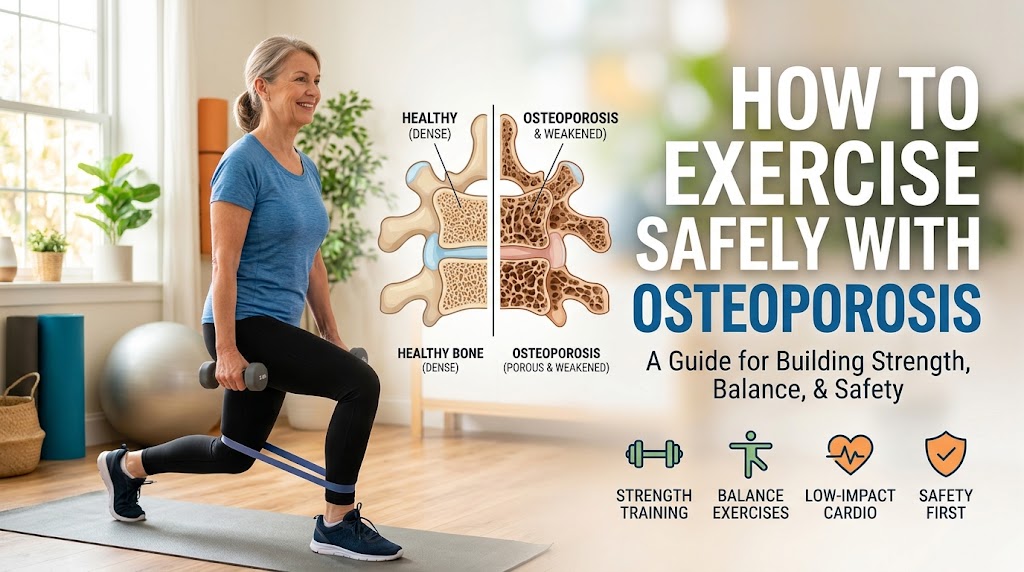
How to Exercise Safely With Osteoporosis
Click Here To Watch Video to Treat Osteoporosis Disease Naturally!..
Safety should always come first.
Start gradually
If you have been inactive, begin with short sessions and low resistance. Increase exercise gradually as your strength and confidence improve.
Focus on technique
Performing an exercise correctly is more important than lifting heavy weights or completing many repetitions.
Use stable support
Keep a sturdy chair, countertop, or railing nearby when performing balance exercises.
Wear appropriate footwear
Shoes should fit well and provide good stability.
Avoid exercising through sharp pain
Mild muscle effort can be normal, but sharp, sudden, or persistent pain should not be ignored.
Stay hydrated
Drink enough fluids, particularly when exercising in warm environments.
Consider professional guidance
A physical therapist or qualified exercise professional experienced in osteoporosis can create a program appropriate for your abilities.
Exercise Is Only One Part of Bone Health

Click Here To Watch Video to Treat Osteoporosis Disease Naturally!..
Exercise works best when combined with other bone-protective habits.
A complete osteoporosis lifestyle plan may include:
- Eating adequate calcium-rich foods
- Getting sufficient vitamin D
- Eating enough protein
- Maintaining a healthy body weight
- Avoiding smoking
- Limiting excessive alcohol
- Preventing falls
- Reviewing medications with your healthcare professional
- Getting bone-density testing when recommended
- Taking prescribed osteoporosis medication when appropriate
Nutrition and exercise complement each other. Strong bones require both adequate nutrients and appropriate physical loading.
When Should You Seek Medical Advice?

Click Here To Watch Video to Treat Osteoporosis Disease Naturally!..
Speak with a healthcare professional before beginning or significantly changing your exercise routine if you have diagnosed osteoporosis, especially if you have had a previous fracture.
You should also seek medical advice if you develop:
- New or severe back pain
- Pain after a fall
- A suspected fracture
- Sudden loss of height
- Increasing difficulty walking
- Frequent falls
- Significant balance problems
- Unexplained weakness
Do not ignore pain after a minor fall, particularly if you have osteoporosis.
Final Thoughts
The best exercises for osteoporosis after 60 are those that safely support bone strength, muscle strength, balance, posture, and everyday mobility.
Walking, sit-to-stands, wall push-ups, heel raises, resistance-band exercises, step-ups, standing leg lifts, balance exercises, posture exercises, and appropriate low-impact aerobic activities can all have a place in a well-rounded program.
The key is to start at an appropriate level, use good technique, progress gradually, and choose exercises that match your individual health and fracture risk.
Exercise cannot guarantee that osteoporosis will be reversed, but regular and appropriate physical activity can be an important part of maintaining strength, mobility, independence, and overall bone health.