Osteoporosis is a condition in which bones become less dense and more fragile, increasing the risk of fractures. Because bone loss can happen gradually without obvious symptoms, many people do not know they have osteoporosis until a fracture occurs.
Fortunately, doctors have several ways to evaluate bone health. These may include bone density scans, X-rays, blood tests, urine tests, and fracture-risk assessments. No single test is appropriate for everyone. The tests a doctor recommends depend on your age, symptoms, medical history, medications, previous fractures, and other risk factors.
Understanding the available diagnostic tests can help you know what to expect if your healthcare professional recommends an osteoporosis evaluation.
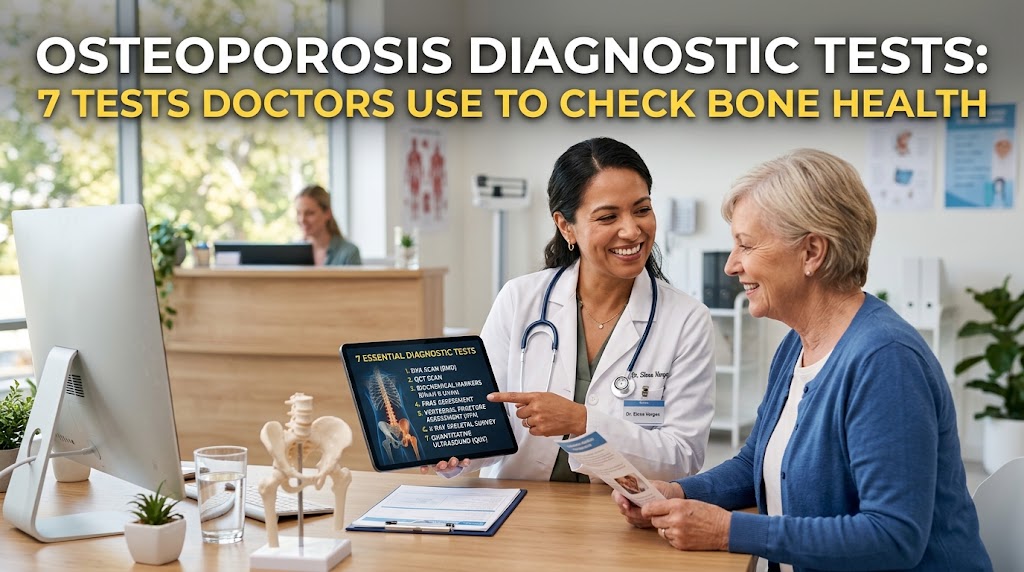
Here are seven common tests and assessments doctors may use to check bone health and investigate osteoporosis.

Click Here To Watch Video to Treat Osteoporosis Disease Naturally!..
1. DXA or DEXA Bone Density Scan
A DXA (dual-energy X-ray absorptiometry) scan, also called a DEXA scan, is the primary test used to measure bone mineral density (BMD).
It is commonly considered the standard test for diagnosing osteoporosis and estimating fracture risk.
During a DXA scan, you usually lie on a padded examination table while a scanning device passes over your body. The machine uses very low-dose X-rays to measure bone density, most commonly at the hip and spine.
The procedure is generally quick and painless. You do not usually need anesthesia, and the amount of radiation is very small.
What Does a DXA Scan Measure?
The test produces measurements that help doctors determine how dense your bones are compared with reference values.
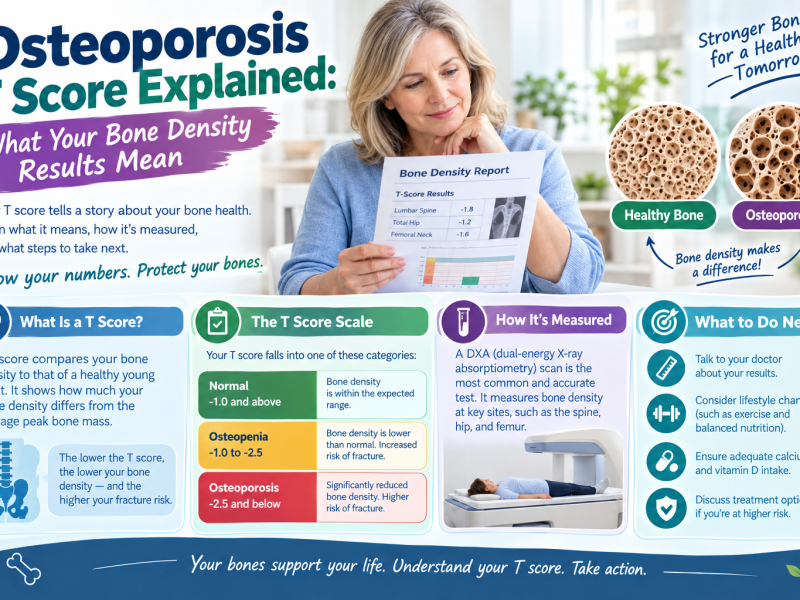
One important result is the T-score, which compares your bone density with that of a healthy young adult reference population.
In postmenopausal women and men aged 50 or older, a T-score of:
- −1.0 or above is generally considered normal bone density.
- Between −1.0 and −2.5 indicates low bone density, commonly called osteopenia.
- −2.5 or below is consistent with osteoporosis.
Doctors do not interpret the T-score alone. They may also consider fracture history, age, medications, medical conditions, and overall fracture risk.
For younger adults, children, and some other groups, doctors may use a Z-score instead.
2. Conventional X-Ray
A standard X-ray is not usually sensitive enough to detect osteoporosis during its early stages. However, it can be useful when a doctor suspects a fracture or wants to investigate changes in the spine.
For example, an X-ray may show a vertebral compression fracture, in which one of the bones in the spine has partially collapsed.
This can be particularly important because some vertebral fractures may occur with little trauma and may initially be mistaken for ordinary back pain.
An X-ray can also help doctors rule out other causes of bone or back pain.
However, a normal X-ray does not necessarily mean your bones are healthy. Significant bone loss may occur before it becomes clearly visible on a conventional X-ray.
For this reason, doctors generally rely on bone-density testing rather than a standard X-ray alone when evaluating osteoporosis.
3. Vertebral Fracture Assessment
A vertebral fracture assessment (VFA) is another imaging-based evaluation that can be performed using specialized equipment, often alongside a DXA scan.
The purpose is to look for fractures or deformities in the vertebrae of the spine.
This can be valuable because vertebral fractures may occur without a major accident. Some people may have no obvious symptoms, while others experience back pain, height loss, or changes in posture.
Identifying an existing vertebral fracture can change how a doctor evaluates a person’s fracture risk and may influence treatment decisions.
VFA uses a relatively low radiation dose compared with many conventional imaging procedures.
Your doctor may recommend this assessment if you have certain risk factors, such as significant height loss, previous fractures, or other findings that raise concern about vertebral fractures.
4. Blood Tests
Blood tests do not directly measure bone density. Instead, they can help doctors determine why bone loss may be occurring or identify medical conditions that could contribute to osteoporosis.
Depending on your circumstances, your healthcare professional may order tests related to:
- Calcium levels
- Vitamin D status
- Kidney function
- Liver function
- Thyroid function
- Blood cell counts
- Parathyroid hormone
- Other markers of mineral or hormone metabolism
The specific tests vary from person to person.
For example, inadequate vitamin D, certain thyroid or parathyroid disorders, kidney problems, and other medical conditions can affect bone metabolism.
Blood testing can therefore be especially useful when a doctor suspects secondary osteoporosis, meaning bone loss caused or influenced by another medical condition or medication.
It is important to understand that routine blood tests cannot tell you your bone density by themselves. A person can have normal blood calcium and still have osteoporosis.
5. Urine Tests
In some cases, doctors may use urine testing as part of an osteoporosis evaluation.
Urine tests can provide information about calcium excretion and certain aspects of bone metabolism. They may also help investigate possible causes of abnormal calcium balance.
For example, a healthcare professional might consider urine testing when evaluating unusual calcium levels, kidney-related issues, or suspected metabolic causes of bone loss.
Urine testing is not required for every person being evaluated for osteoporosis.
The decision depends on your medical history, blood-test results, medications, symptoms, and other risk factors.
When used appropriately, urine testing can provide additional information that helps doctors understand the factors contributing to reduced bone strength.
6. FRAX Fracture Risk Assessment
The FRAX tool is not a physical test like a blood test or scan. Instead, it is a fracture-risk assessment that estimates a person’s likelihood of experiencing certain osteoporosis-related fractures over a specified period.
The assessment considers several factors, which can include:
- Age
- Sex
- Weight and height
- Previous fractures
- Parental history of hip fracture
- Smoking
- Alcohol intake
- Certain medications, such as glucocorticoids
- Rheumatoid arthritis
- Other causes of secondary osteoporosis
- Bone mineral density at the femoral neck, when available
A doctor may use fracture-risk assessment alongside DXA results rather than relying on bone density alone.
This is important because fracture risk depends on more than bone mineral density. Two people with similar BMD measurements can have different overall risks because of differences in age, fracture history, medications, or other health factors.
FRAX can therefore help healthcare professionals make more informed decisions about prevention and treatment.
7. Specialized Imaging and Bone Turnover Tests
In selected cases, doctors may use additional tests to obtain more information about bone structure or bone metabolism.
Advanced imaging techniques such as CT or MRI may be considered when a healthcare professional needs to investigate a suspected fracture, spinal problem, or another condition that cannot be adequately evaluated with a DXA scan or standard X-ray.
These tests are not usually the first-line method for diagnosing osteoporosis itself.
Doctors may also order specialized bone turnover marker tests. These blood or urine tests measure substances associated with bone formation or bone breakdown.
Bone turnover markers can sometimes help healthcare professionals monitor how bones are responding to treatment or understand bone metabolism in particular situations.
However, these tests are not generally used by themselves to diagnose osteoporosis. Their usefulness depends on the individual clinical situation.
Which Osteoporosis Test Is Best?
Click Here To Watch Video to Treat Osteoporosis Disease Naturally!..
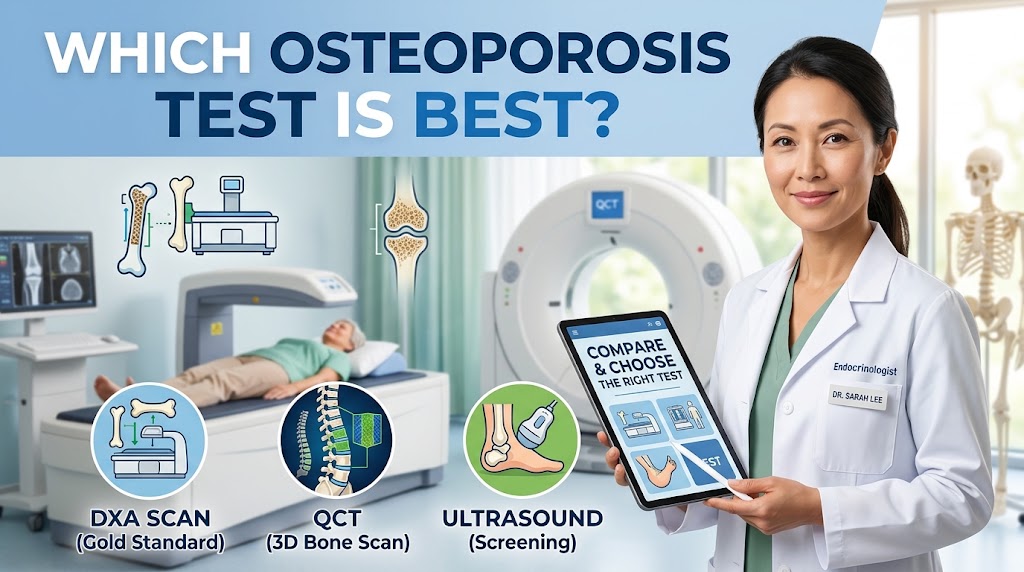
For most people who need their bone density measured, DXA/DEXA scanning is the key diagnostic test.
However, doctors often use several pieces of information together.
For example, an evaluation may include:
- A medical history and physical examination
- A discussion of fracture history and osteoporosis risk factors
- A DXA bone-density scan
- Blood tests when an underlying cause is suspected
- Fracture-risk assessment
- X-rays or vertebral imaging when fractures are suspected
- Additional tests when clinically appropriate
This comprehensive approach helps doctors distinguish osteoporosis from other conditions that can affect bones.
Who May Need Osteoporosis Testing?

Click Here To Watch Video to Treat Osteoporosis Disease Naturally!..
Screening recommendations vary according to age, sex, country-specific guidelines, and individual risk factors.
Doctors may recommend bone-density testing earlier than routine screening when someone has factors that increase fracture risk.
These can include:
- A previous fracture after a minor injury
- A family history of osteoporosis or hip fracture
- Long-term use of certain medications, particularly corticosteroids
- Early menopause or other significant hormonal changes
- Low body weight
- Certain medical conditions affecting bone metabolism
- Smoking
- Heavy alcohol consumption
- Significant height loss
- Other clinical risk factors
If you are unsure whether you should have a bone-density test, discuss your personal risk factors with a healthcare professional.
What Happens After an Osteoporosis Diagnosis?
Click Here To Watch Video to Treat Osteoporosis Disease Naturally!..
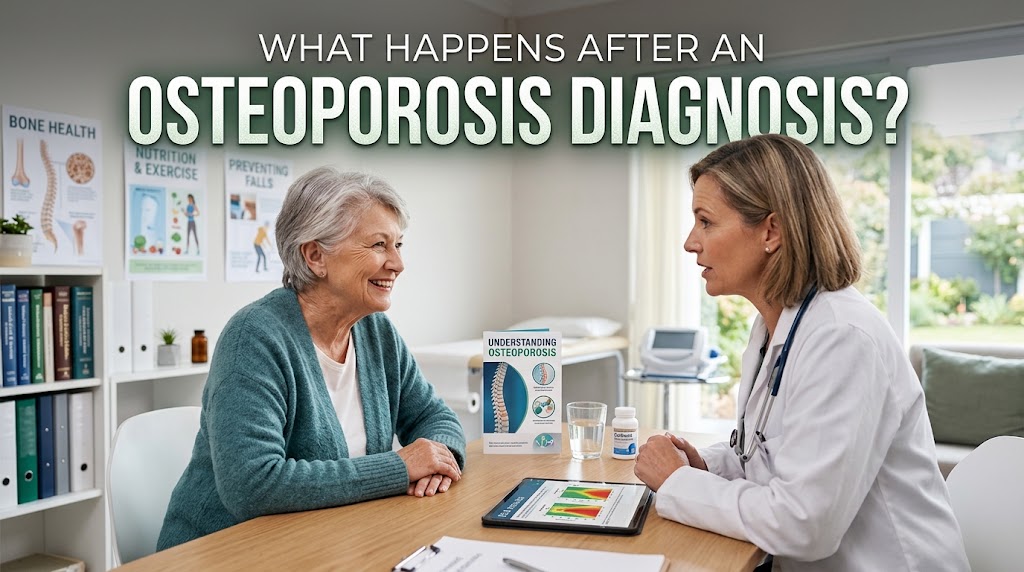
A diagnosis of osteoporosis does not mean that fractures are inevitable.
Treatment and prevention depend on your individual fracture risk and overall health. Your healthcare professional may recommend lifestyle changes, fall-prevention strategies, nutritional improvements, exercise, or medications when appropriate.
Focus on Nutrition
Adequate calcium, vitamin D, protein, and other nutrients are important for maintaining healthy bones. Nutritional needs vary, so avoid taking high-dose supplements without discussing them with a healthcare professional.
Exercise Safely
Weight-bearing activity, resistance training, and balance exercises can support bone and muscle health.
If you already have osteoporosis or have suffered fractures, seek professional guidance before beginning a new exercise program. Some exercises may need to be modified to reduce injury risk.
Reduce Fall Risk
Fall prevention becomes particularly important when bones are fragile. Improving lighting, removing trip hazards, using handrails, maintaining vision care, and addressing balance problems can help reduce the likelihood of falls.
Review Medications
Some medications can affect bone density or fracture risk. If you take long-term corticosteroids or other medicines that may affect bone health, ask your healthcare professional whether additional monitoring or preventive treatment is appropriate.
Final Thoughts
Osteoporosis can progress silently, but modern diagnostic methods allow healthcare professionals to identify low bone density, investigate possible causes, and estimate fracture risk.
The DXA/DEXA scan is the main test used to measure bone mineral density, while X-rays and vertebral fracture assessments can help identify spinal fractures. Blood and urine tests may uncover medical or metabolic factors contributing to bone loss. Fracture-risk tools such as FRAX can provide additional information, while specialized imaging and bone turnover tests may be useful in selected cases.
No single test tells the entire story. Doctors consider your bone density together with your age, medical history, fracture history, medications, lifestyle, and other risk factors.
If you are concerned about osteoporosis—especially if you have experienced a low-impact fracture, significant height loss, or have several risk factors—talk with a qualified healthcare professional about whether bone-health testing is appropriate.
Medical disclaimer: This article is for general educational purposes only and is not a substitute for professional medical advice, diagnosis, or treatment. Test selection and interpretation should always be determined by a qualified healthcare professional based on your individual circumstances.