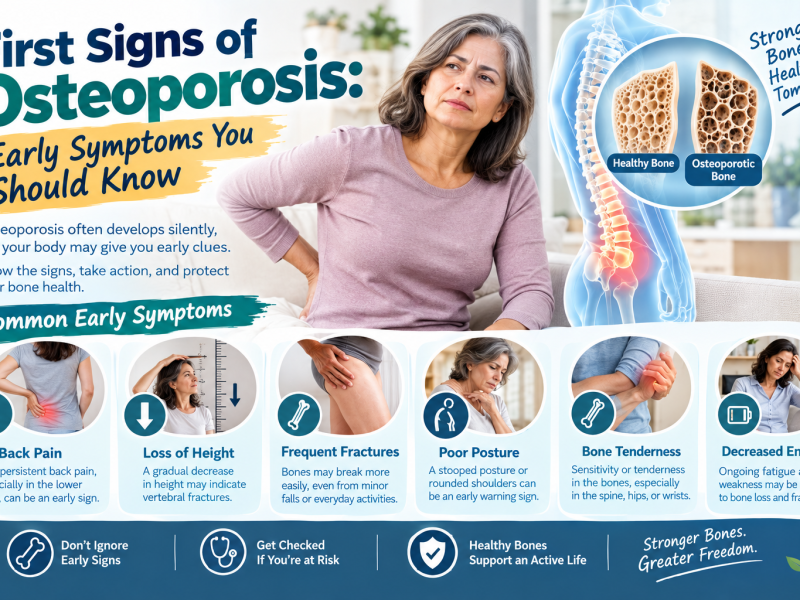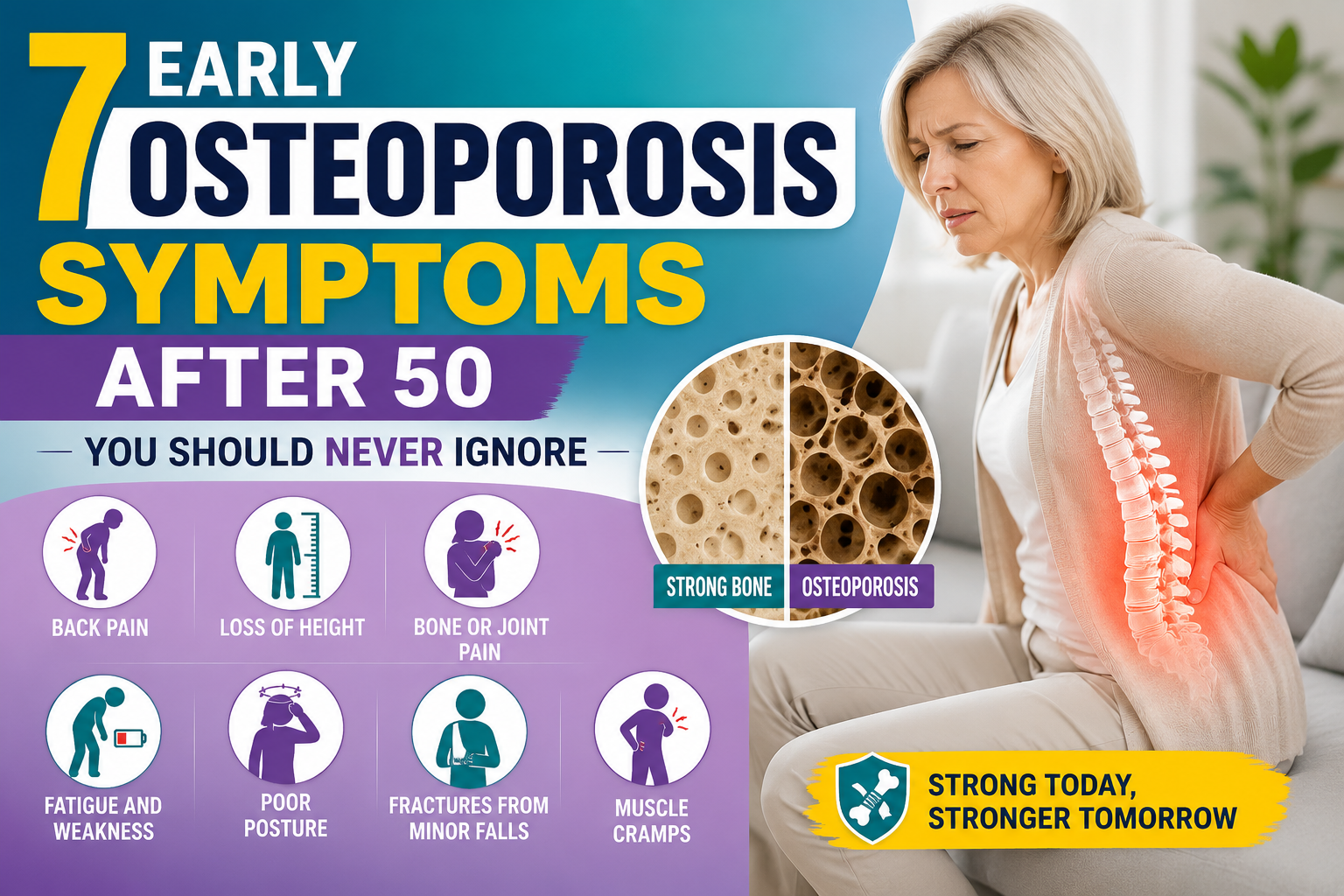
Osteoporosis is often called a “silent disease” because bone loss can happen gradually without obvious symptoms. Many people do not realize their bones have become weak until they experience a fracture after a relatively minor fall or accident. However, there can be warning signs—particularly after age 50—that deserve attention.
As we get older, bone remodeling naturally changes. Bone mass can decline faster than the body replaces it, and the risk can increase further after menopause in women. Men can also develop osteoporosis, especially with advancing age and certain medical conditions or medications.
Recognizing possible warning signs early can encourage you to discuss your bone health with a healthcare professional, assess your risk factors, and take steps to protect your bones.
Below are seven potential signs associated with osteoporosis or vertebral bone loss after 50 that you should not ignore.
1. Unexplained Back Pain
Persistent or sudden back pain can have many causes, including muscle strain, arthritis, spinal problems, or injuries. But in someone over 50, unexplained or sudden back pain can sometimes be associated with a vertebral compression fracture caused by weakened bones.
These fractures can occur during ordinary activities such as bending, lifting, coughing, or reaching. In some cases, the pain may appear suddenly and become worse with standing or movement.
Not every person with a vertebral fracture experiences severe pain. Some fractures may produce mild discomfort or go unnoticed initially.
If you develop sudden, persistent, or unexplained back pain—especially after a minor movement or fall—talk with a healthcare professional rather than assuming it is simply a normal part of aging.
2. Losing Height Over Time
Have you noticed that you are shorter than you were several years ago?
A gradual loss of height can occur with aging, but significant or progressive height loss may be a warning sign of changes in the spine. Compression fractures in the vertebrae can cause individual spinal bones to collapse, reducing overall height.
For this reason, measuring your height periodically can provide useful information about changes in your skeletal health.
A noticeable decrease in height is particularly worth discussing if it occurs together with back pain, changes in posture, or a history of fractures.
Keep in mind that height loss does not automatically mean you have osteoporosis. Spinal arthritis, disc degeneration, and other conditions can also contribute to changes in height.
3. A Stooped or Curved Posture
Another possible sign of vertebral fractures is a noticeable change in posture.
Some people with multiple spinal compression fractures gradually develop a rounded upper back. This condition is sometimes referred to as kyphosis or, in severe cases, a “dowager’s hump.”
The change may happen slowly, making it difficult to notice at first. Family members or friends may notice that someone is becoming more stooped before the person recognizes the change themselves.
A curved posture can also develop for reasons unrelated to osteoporosis, including normal spinal aging, muscle weakness, arthritis, and other spinal conditions.
Nevertheless, a new or worsening stooped posture after 50 should be discussed with a healthcare professional, particularly if it is accompanied by back pain or measurable height loss.
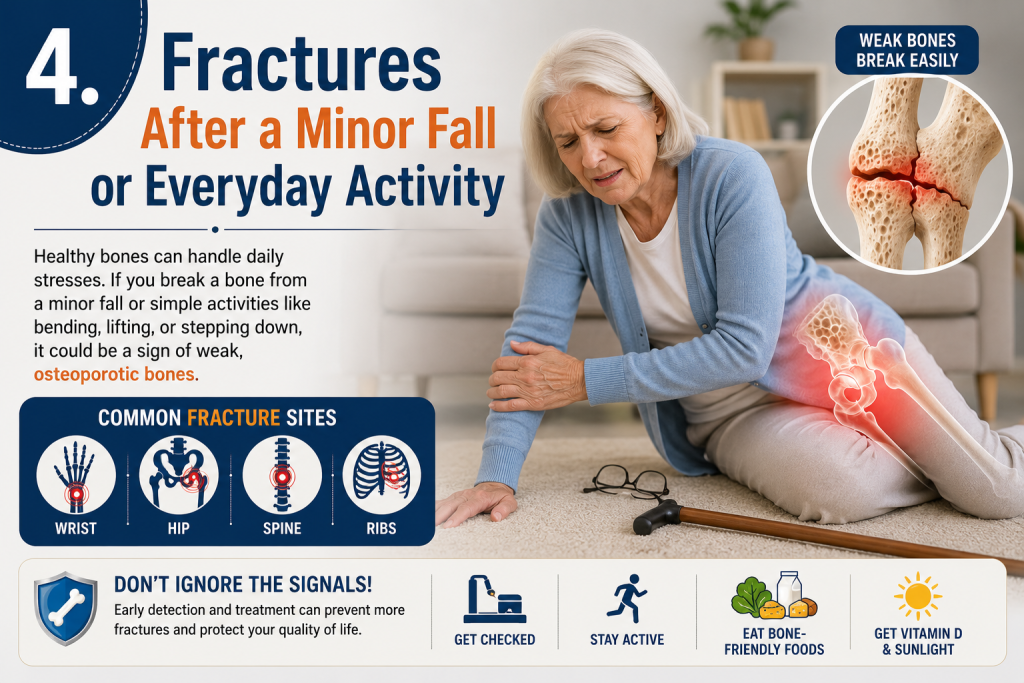
4. Fractures After a Minor Fall or Everyday Activity
Click Here To Watch Video to Treat Osteoporosis Disease Naturally!..
One of the most important warning signs of weakened bones is a fracture resulting from relatively little force.
Healthy bones can usually withstand ordinary daily activities. When bones become significantly weakened, however, a fracture may occur after a low-impact event, such as falling from standing height.
Common osteoporosis-related fractures include those involving the:
- Hip
- Spine
- Wrist
- Upper arm
- Pelvis
A fracture after a minor fall does not necessarily prove that osteoporosis is present. But adults over 50 who experience a fracture from a low-impact event should consider having their bone health evaluated.
A previous fracture can also increase the risk of future fractures, making follow-up particularly important.
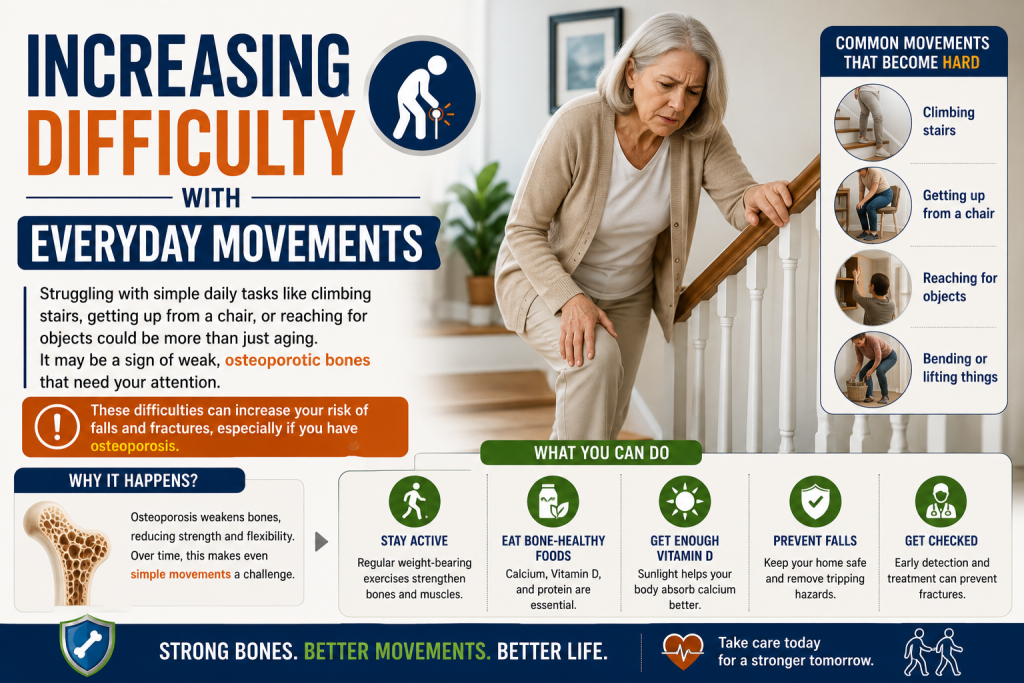
5. Increasing Difficulty With Everyday Movements
Click Here To Watch Video to Treat Osteoporosis Disease Naturally!..
Osteoporosis itself does not usually cause muscle weakness, but spinal fractures and changes in posture can make everyday movements more difficult.
You may notice discomfort or difficulty when:
- Bending over
- Standing upright for long periods
- Lifting objects
- Getting out of a chair
- Walking for extended periods
- Performing household activities
These symptoms have many possible explanations, so they should not automatically be attributed to osteoporosis.
However, if these difficulties appear alongside persistent back pain, height loss, or a previous fracture, they are worth discussing with a healthcare professional.
A proper evaluation can help determine whether the problem is related to bone health, muscles, joints, the spine, or another condition.
6. Sudden or Recurrent Fractures
A single fracture can happen to anyone. But experiencing more than one fracture, particularly after age 50, deserves attention.
Repeated fractures may indicate that bone strength is lower than expected. This can happen because of osteoporosis or another condition that affects bone metabolism.
Certain factors can increase osteoporosis risk, including:
- Older age
- Menopause
- A family history of osteoporosis or hip fracture
- Low body weight
- Smoking
- Heavy alcohol consumption
- Physical inactivity
- Certain medications, particularly long-term corticosteroid use
- Some medical conditions that interfere with calcium or vitamin D metabolism
If you have experienced multiple fractures or a fracture from a low-impact injury, ask your healthcare professional whether you should undergo a bone-health assessment.
7. Weak Grip or Reduced Physical Strength
Reduced grip strength is not a direct diagnostic symptom of osteoporosis, but it can be an important clue when evaluating overall health and fracture risk in older adults.
As people age, they may lose muscle mass and physical strength. This can affect balance, mobility, and the ability to recover safely from a stumble or fall.
Poor muscle strength can contribute to falls, while weak bones can increase the likelihood that a fall results in a fracture. This makes bone health and muscle health closely connected when considering fracture prevention.
If you notice a substantial decline in your strength, balance, or ability to perform everyday activities, speak with a healthcare professional. They may assess your muscle function, fall risk, nutrition, activity level, and bone health.
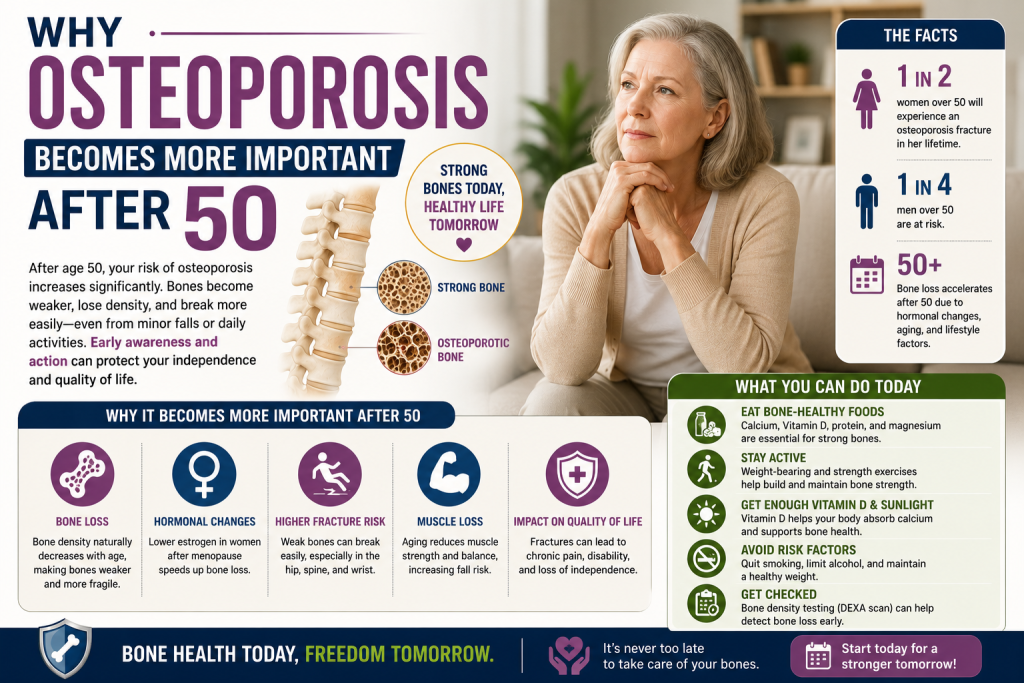
Why Osteoporosis Becomes More Important After 50
Click Here To Watch Video to Treat Osteoporosis Disease Naturally!..
Bone is living tissue. Throughout life, the body continuously removes old bone and replaces it with new bone. When bone breakdown begins to outpace bone formation, bone density can decline.
For many women, bone loss can accelerate around and after menopause because estrogen levels decrease. Men can also experience gradual bone loss with aging, although the pattern and contributing factors differ.
The result can be bones that are less dense and more fragile.
The important point is that osteoporosis is not an inevitable part of aging. Some bone loss occurs naturally, but there are ways to reduce fracture risk and maintain skeletal health.
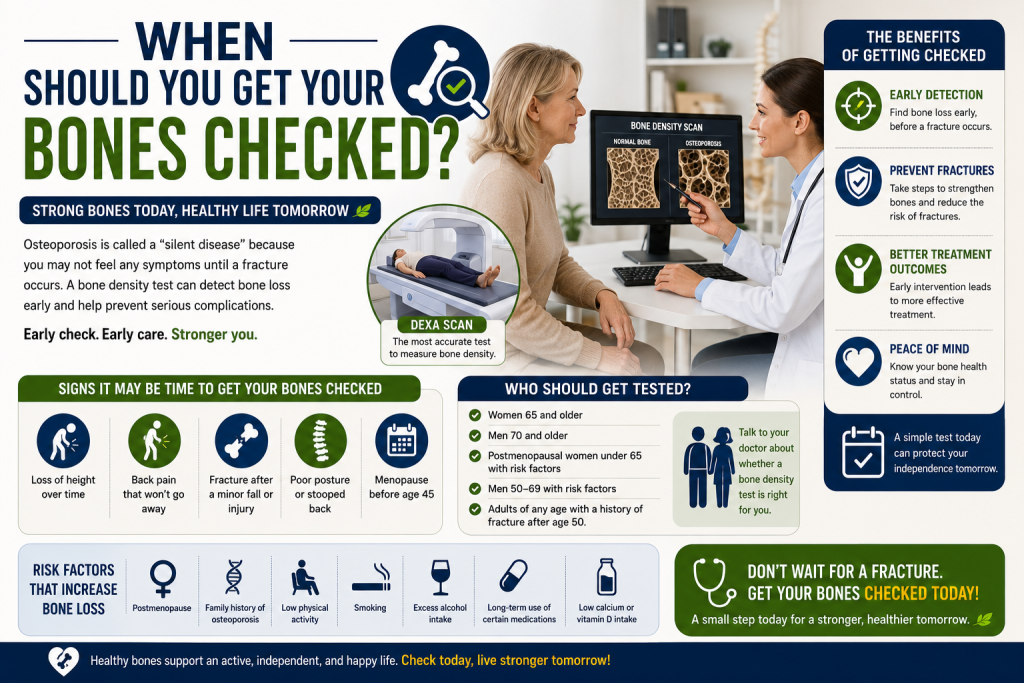
When Should You Get Your Bones Checked?
Click Here To Watch Video to Treat Osteoporosis Disease Naturally!..
If you are over 50 and have experienced a fracture after a minor fall, unexplained height loss, persistent back pain, or other risk factors for osteoporosis, discuss your concerns with a healthcare professional.
A common test for measuring bone mineral density is a DXA or DEXA scan. It is a specialized, low-dose X-ray test that measures bone density, commonly at the hip and spine.
Your healthcare professional may also consider your age, sex, medical history, medications, previous fractures, family history, and other factors when estimating your fracture risk.
Screening recommendations vary depending on age, sex, risk factors, and country-specific guidelines, so it is best to discuss the appropriate timing with your healthcare provider.
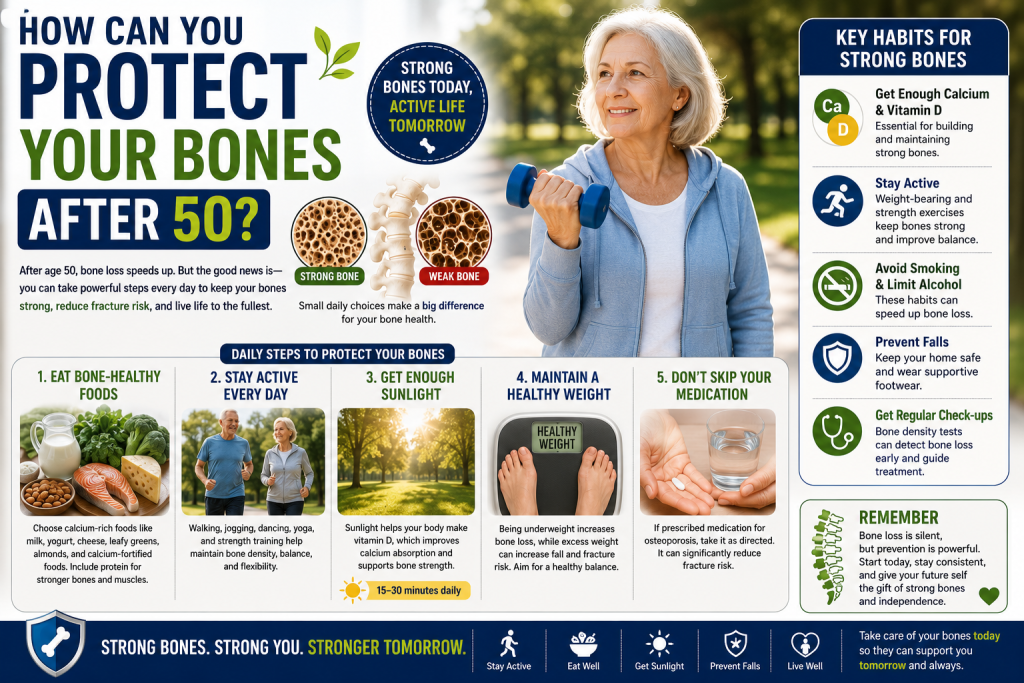
How Can You Protect Your Bones After 50?
Click Here To Watch Video to Treat Osteoporosis Disease Naturally!..
Although osteoporosis cannot always be prevented, several lifestyle habits can support bone and overall health.
Eat a Bone-Friendly Diet
Calcium and vitamin D are important for maintaining healthy bones. Good dietary sources of calcium include dairy products, fortified foods, certain leafy greens, tofu made with calcium, and some fish with edible bones.
Vitamin D helps the body absorb calcium. Sources include sunlight exposure, fortified foods, and certain foods and supplements when appropriate.
Your individual nutritional needs can vary, so speak with a healthcare professional or registered dietitian if you are unsure whether your diet provides enough nutrients.
Stay Physically Active
Regular physical activity can help maintain muscle strength, balance, and bone health.
Weight-bearing activities such as walking and resistance exercises can be useful components of a healthy exercise routine. Balance exercises can also help reduce fall risk.
If you already have osteoporosis or have experienced fractures, ask a healthcare professional or qualified physical therapist which exercises are appropriate for you. Some movements may need to be modified when bones are fragile.
Avoid Smoking
Smoking is associated with poorer bone health and increased fracture risk. If you smoke, quitting can benefit your bones as well as your cardiovascular and respiratory health.
Limit Excessive Alcohol
Heavy alcohol consumption can contribute to falls and poor bone health. Limiting alcohol can therefore be an important part of reducing fracture risk.
Make Your Home Safer
Preventing falls is especially important when bones are fragile.
Simple measures can include removing loose rugs, improving lighting, keeping walkways clear, using handrails on stairs, and addressing vision problems.
The Bottom Line
Osteoporosis can develop quietly, but some changes should never be dismissed simply as “getting older.”
Unexplained back pain, noticeable height loss, a new stooped posture, fractures after minor injuries, recurrent fractures, difficulty with everyday movement, and declining physical strength can all be reasons to discuss your bone and overall health with a healthcare professional.
These signs do not automatically mean you have osteoporosis. Many other conditions can cause similar symptoms. However, identifying osteoporosis or low bone density early can provide an opportunity to reduce future fracture risk.
If you are over 50, especially if you have risk factors or have experienced a low-impact fracture, consider talking with your healthcare professional about whether a bone-health evaluation is appropriate.
Your bones support you every day. Paying attention to changes in your posture, height, pain, mobility, and fracture history can be an important step toward protecting your independence and quality of life as you age.
Medical note: This article is for general educational purposes and does not replace professional medical advice, diagnosis, or treatment. Seek prompt medical care for severe or sudden back pain, suspected fractures, or other concerning symptoms.