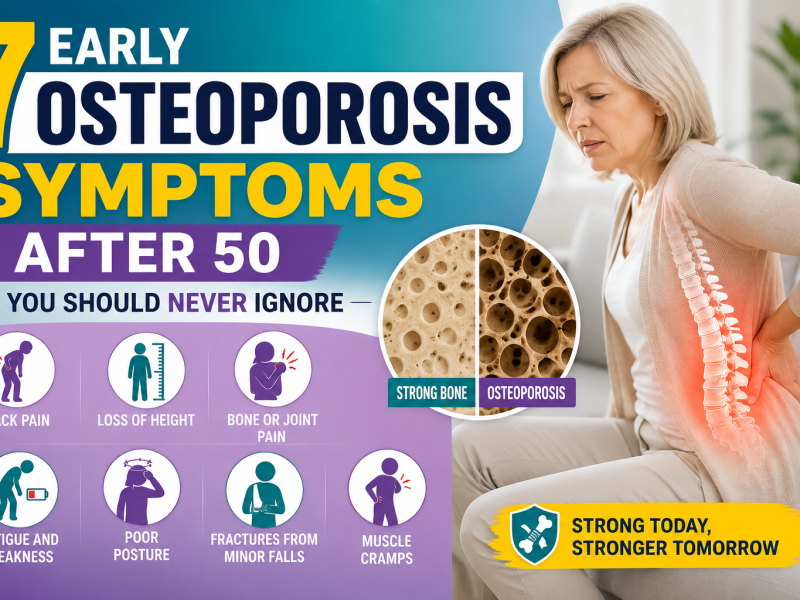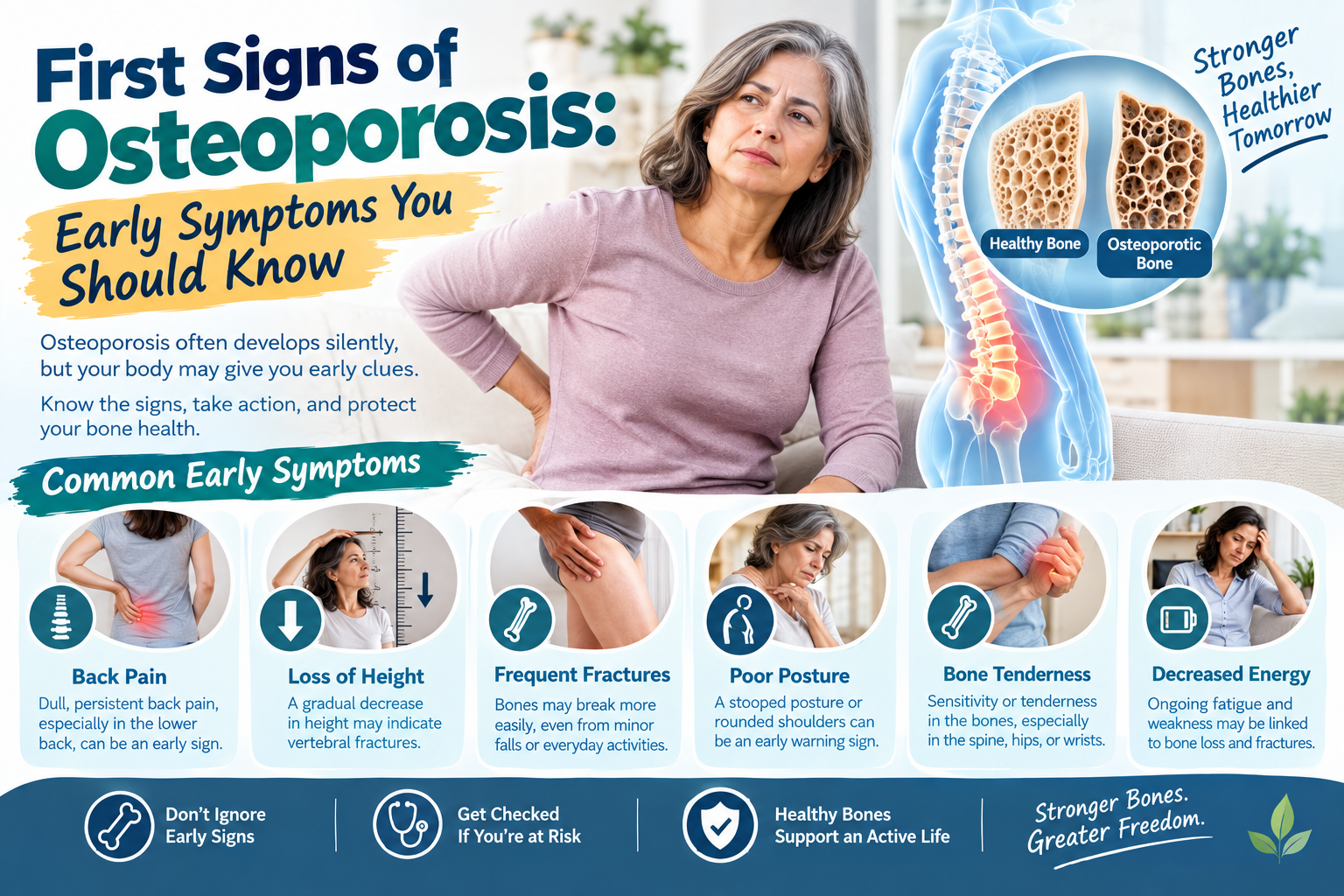
Osteoporosis is often called a “silent disease” because bone loss can occur gradually without obvious symptoms. Many people do not realize they have osteoporosis until they experience a broken bone after a relatively minor fall or accident.
Knowing the first signs of osteoporosis can help you recognize potential warning signs and seek medical evaluation earlier. While osteoporosis itself usually does not cause pain in its early stages, certain changes—such as unexplained fractures, loss of height, back pain, or changes in posture—can indicate weakened bones.
Early diagnosis is important because osteoporosis can often be managed with lifestyle changes, fall prevention, and appropriate medical treatment. Understanding your risk factors and discussing bone health with a healthcare professional can help protect your bones as you age.
What Is Osteoporosis?
Click Here To Watch Video to Treat Osteoporosis Disease Naturally!..
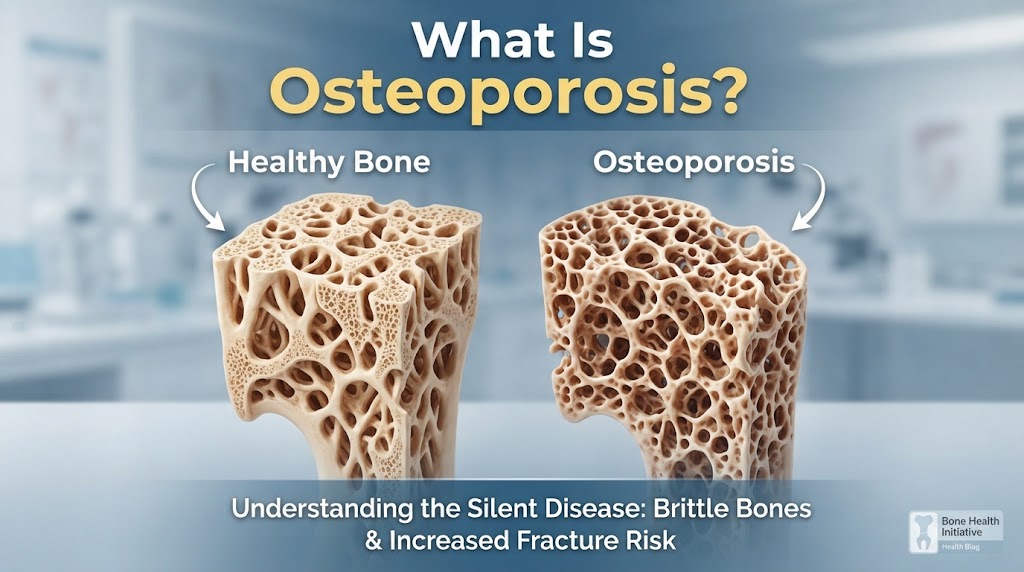
Osteoporosis is a bone disease in which bone density and bone quality decrease, making bones weaker and more likely to fracture.
Healthy bones continuously undergo a process called bone remodeling. Old bone is removed and replaced with new bone. With osteoporosis, bone loss can become greater than new bone formation.
As a result, bones can become less dense and structurally weaker.
Osteoporosis can affect anyone, but the risk increases with age. Women are particularly vulnerable after menopause because the decline in estrogen can accelerate bone loss.
Commonly affected areas include:
- Hip
- Spine
- Wrist
- Upper arm
- Pelvis
A fracture caused by a relatively minor fall or everyday activity may sometimes be the first indication that bone strength has decreased.
Why Is Osteoporosis Called a Silent Disease?
Click Here To Watch Video to Treat Osteoporosis Disease Naturally!..
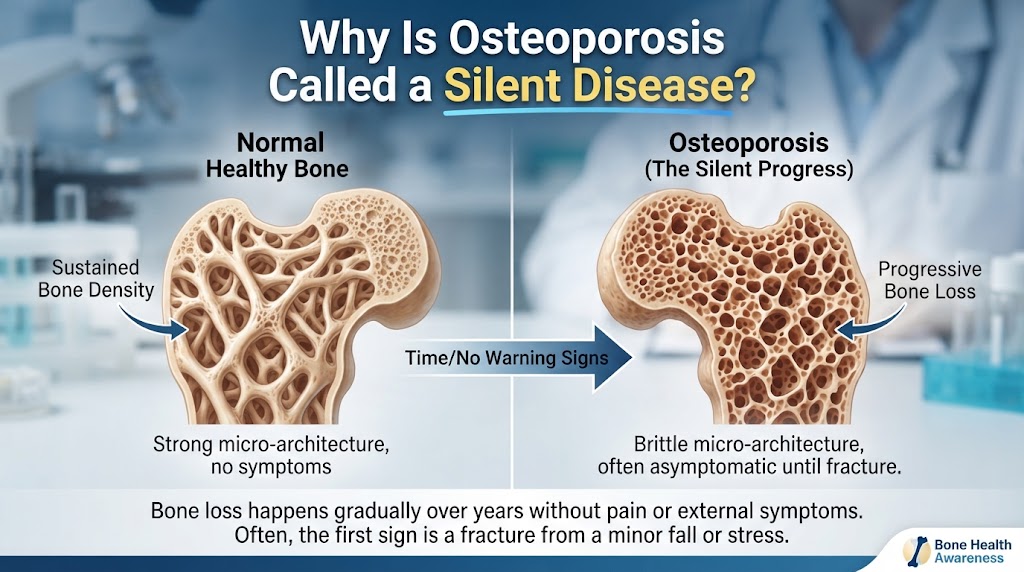
One of the most important things to understand about osteoporosis is that bone loss itself usually does not cause noticeable symptoms.
A person can lose substantial bone density without experiencing:
- Pain
- Weakness
- Changes in movement
- Visible physical changes
This means that waiting for symptoms may delay diagnosis.
Instead, doctors often identify osteoporosis through risk assessment and bone-density testing before a fracture occurs.
A dual-energy X-ray absorptiometry (DXA or DEXA) scan can measure bone mineral density and help determine whether a person has osteoporosis or low bone mass.
First Sign: A Fracture After a Minor Fall
A broken bone following a relatively minor fall can be an important warning sign of osteoporosis.
For example, a person may fracture a wrist after falling from standing height. Another person may develop a spinal compression fracture after lifting something or making a relatively ordinary movement.
These fractures are sometimes called fragility fractures because they occur when bones are weaker than expected.
Common osteoporosis-related fractures occur in the:
- Hip
- Spine
- Wrist
A fracture that occurs after a low-impact incident should be discussed with a healthcare professional, particularly in older adults.
Second Sign: Sudden or Persistent Back Pain
Back pain can have many causes, including muscle strain, arthritis, disc problems, and injuries.
However, sudden or persistent back pain can sometimes be caused by a vertebral compression fracture.
When weakened vertebrae partially collapse, a person may experience:
- Sudden back pain
- Pain that worsens with movement
- Difficulty standing upright
- Reduced mobility
- Tenderness in the affected area
Some vertebral fractures cause only mild symptoms or may go unnoticed.
Repeated spinal compression fractures can eventually affect posture and height.
Third Sign: Loss of Height
Losing some height as you get older can happen for several reasons, but noticeable height loss may sometimes be associated with vertebral fractures.
When weakened vertebrae compress, the spine can become shorter.
If you notice that you have become significantly shorter over the years, tell your healthcare professional.
Height loss may occur alongside:
- Vertebral compression fractures
- Spinal curvature
- Disc changes
- Age-related posture changes
A significant reduction in height can therefore be an important reason to evaluate bone health.
Fourth Sign: A Stooped or Curved Posture
A forward-curved upper back can develop when vertebrae become weakened and compressed.
This condition is sometimes called kyphosis.
A person may notice that:
- Their upper back appears more rounded.
- They have difficulty standing completely straight.
- Their head seems positioned farther forward.
- Their posture has gradually changed.
A stooped posture is not always caused by osteoporosis. Arthritis, muscle weakness, spinal conditions, and normal aging can also affect posture.
However, new or progressive spinal curvature should be medically evaluated.
Fifth Sign: Fractures From Everyday Activities
Osteoporosis-related fractures do not always require a major accident.
In severely weakened bones, fractures can sometimes occur during relatively ordinary activities, such as:
- Bending
- Lifting
- Coughing
- Twisting
- Getting out of a chair
If an unexpected fracture occurs without significant trauma, osteoporosis should be considered as one possible underlying cause.
Sixth Sign: Repeated Fractures
Having one fragility fracture can increase concern about bone health. Multiple fractures can be an even stronger reason to investigate osteoporosis.
Repeated fractures may indicate that bones have become significantly weaker.
If you have experienced more than one fracture from relatively minor injuries, ask your healthcare professional whether you should have a bone-density evaluation.
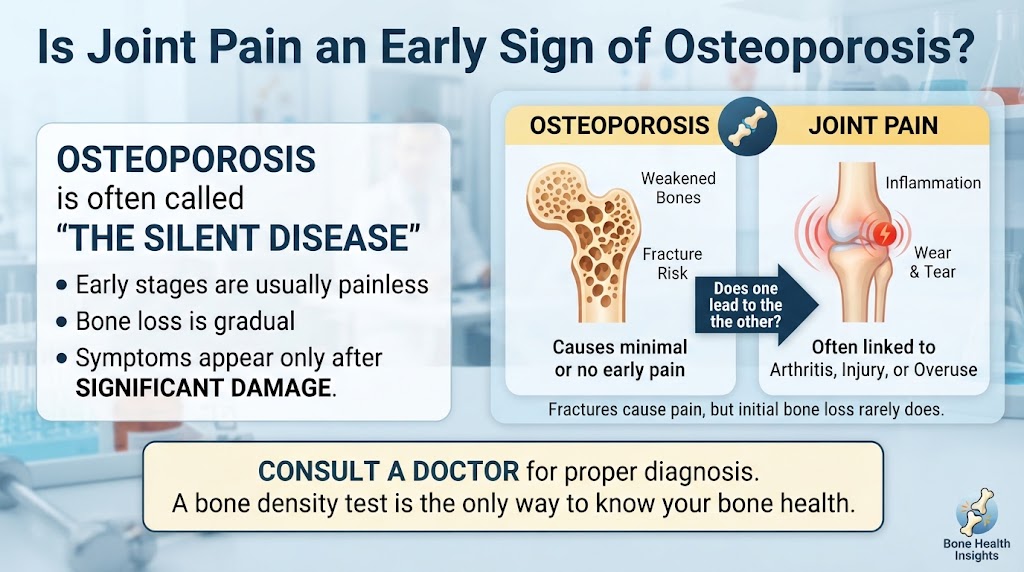
Is Joint Pain an Early Sign of Osteoporosis?
Click Here To Watch Video to Treat Osteoporosis Disease Naturally!..
Osteoporosis itself does not usually cause generalized joint pain.
This distinction is important because people may experience joint or muscle pain and assume that osteoporosis is responsible.
Conditions such as osteoarthritis, rheumatoid arthritis, muscle strain, and other musculoskeletal disorders can cause pain.
However, osteoporosis can indirectly lead to pain when weakened bones fracture.
For example, a vertebral compression fracture can cause significant back pain.
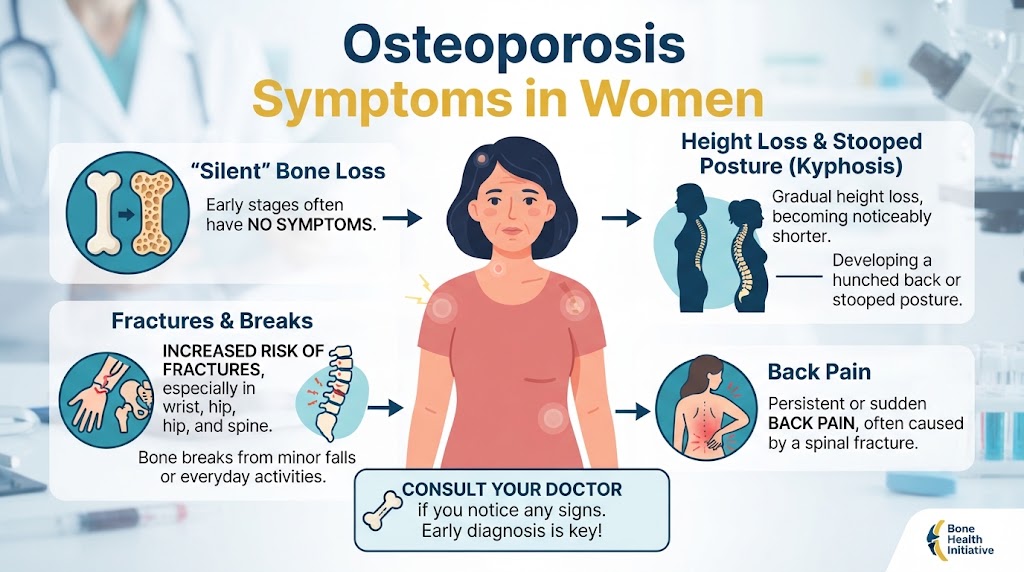
Osteoporosis Symptoms in Women
Click Here To Watch Video to Treat Osteoporosis Disease Naturally!..
Women have a higher risk of osteoporosis, especially after menopause.
Estrogen plays an important role in maintaining bone health. When estrogen levels decline during menopause, bone loss can accelerate.
Women should discuss bone-health screening with their healthcare provider if they have additional risk factors, such as:
- Older age
- Previous fractures
- Family history of osteoporosis
- Low body weight
- Smoking
- Heavy alcohol consumption
- Long-term corticosteroid use
- Certain medical conditions
- Early menopause
Not every woman develops osteoporosis after menopause, but menopause is an important period for assessing bone health.
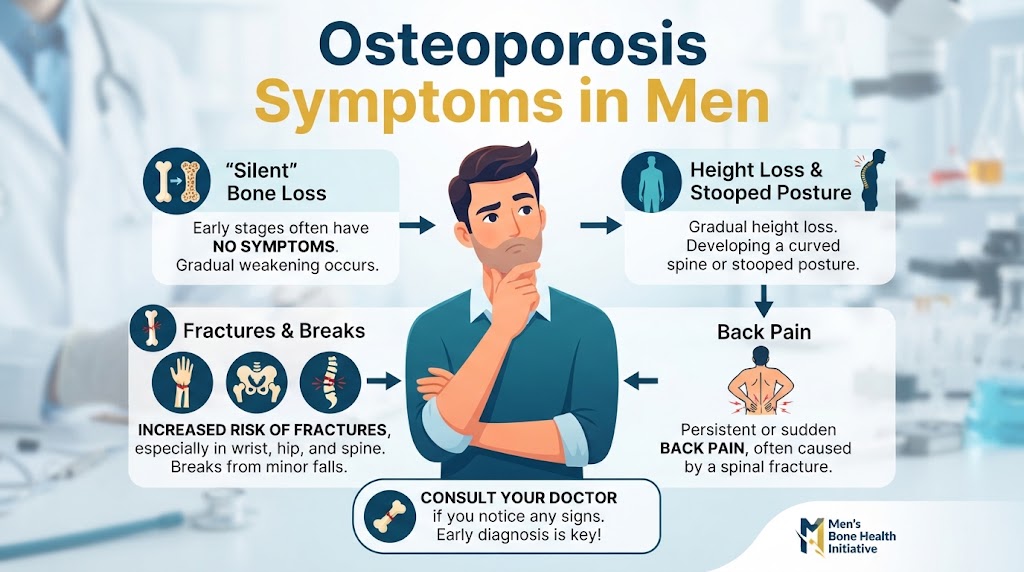
Osteoporosis Symptoms in Men
Click Here To Watch Video to Treat Osteoporosis Disease Naturally!..
Osteoporosis can also affect men.
Although women generally have a higher risk, men can experience significant bone loss as they age.
Potential risk factors include:
- Increasing age
- Previous fractures
- Low testosterone
- Long-term corticosteroid use
- Smoking
- Heavy alcohol consumption
- Certain gastrointestinal conditions
- Kidney or liver disease
- Certain medications
Men who experience an unexpected fracture should not assume that osteoporosis is only a woman’s disease.
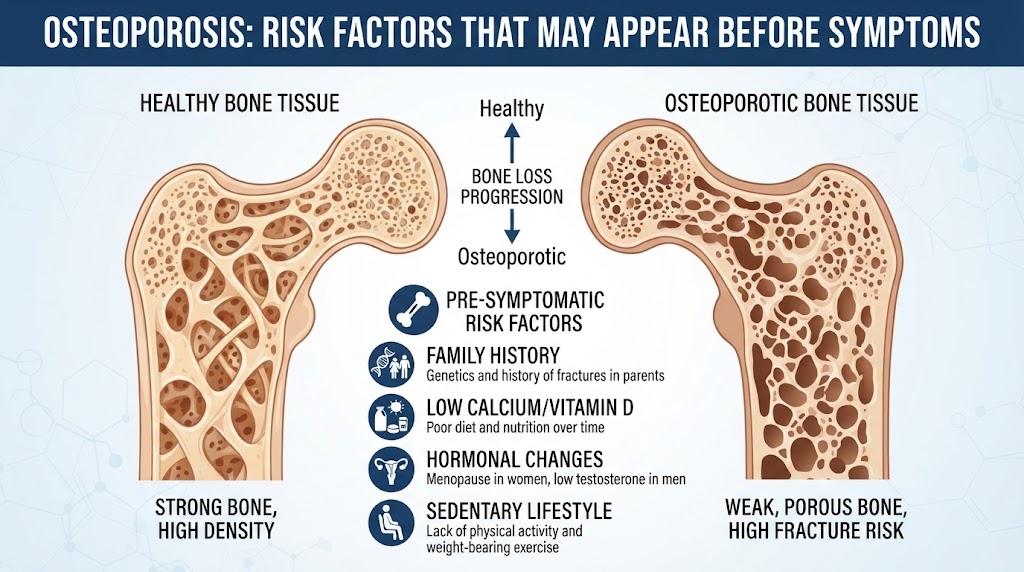
Risk Factors That May Appear Before Symptoms
Click Here To Watch Video to Treat Osteoporosis Disease Naturally!..
Because osteoporosis often has no early symptoms, understanding risk factors is especially important.
Some important risk factors include:
Age
Bone density generally decreases as people get older.
Menopause
The decline in estrogen after menopause can accelerate bone loss.
Family History
A parent or close relative with osteoporosis or a hip fracture can increase your risk.
Low Body Weight
Being underweight can be associated with lower bone mass and increased fracture risk.
Smoking
Smoking can negatively affect bone health and is associated with increased fracture risk.
Excessive Alcohol
Heavy alcohol consumption can contribute to weaker bones and increase the risk of falling.
Corticosteroid Medication
Long-term use of certain corticosteroids can significantly increase osteoporosis risk.
Lack of Physical Activity
Regular weight-bearing and muscle-strengthening activities support bone health. Inactivity can contribute to weaker bones and reduced muscle strength.
How Is Osteoporosis Diagnosed?
Because osteoporosis usually does not produce early symptoms, bone-density testing is an important diagnostic tool.
A DXA scan is a painless test that measures bone mineral density, commonly at the:
- Hip
- Spine
The results are usually reported using a T-score in postmenopausal women and men aged 50 or older.
A T-score compares bone density with that of a healthy young adult reference population.
Healthcare professionals use the results along with age, medical history, fracture history, and other risk factors to assess fracture risk and determine whether treatment is appropriate.
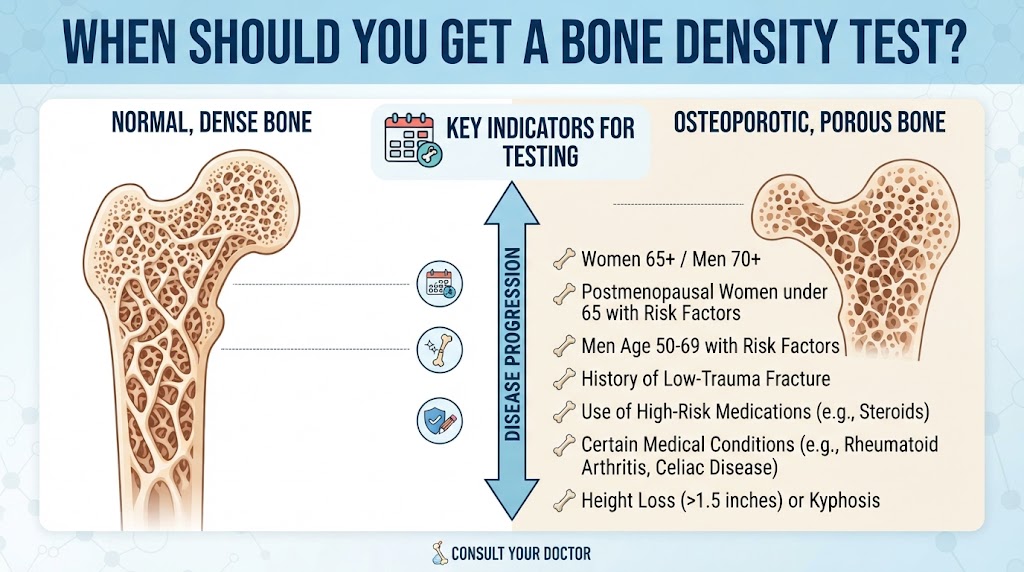
When Should You Get a Bone Density Test?
Click Here To Watch Video to Treat Osteoporosis Disease Naturally!..
Screening recommendations vary depending on age, sex, risk factors, and country-specific guidelines.
In the United States, the U.S. Preventive Services Task Force recommends screening women aged 65 years or older and recommends risk assessment for postmenopausal women younger than 65 who have increased fracture risk.
People with certain risk factors may need evaluation earlier.
Talk with your healthcare professional about whether you need a DXA scan if you:
- Have experienced a fragility fracture
- Have significant height loss
- Have long-term corticosteroid exposure
- Have conditions associated with bone loss
- Have a strong family history
- Have other significant osteoporosis risk factors
How Can You Support Bone Health?
Even though osteoporosis cannot always be prevented, several lifestyle habits support healthy bones.
Get Enough Calcium
Calcium is an important component of bone tissue.
Good food sources include:
- Milk
- Yogurt
- Cheese
- Calcium-fortified plant beverages
- Tofu made with calcium
- Some leafy green vegetables
- Certain fish eaten with bones
The amount you need depends on your age and individual circumstances.
Maintain Adequate Vitamin D
Vitamin D helps the body absorb calcium.
Sources include sunlight exposure, certain foods, and supplements when medically appropriate.
Your healthcare professional can advise whether vitamin D testing or supplementation is appropriate for you.
Exercise Regularly
Weight-bearing and resistance exercises can help maintain bone strength and muscle function.
Examples include:
- Walking
- Stair climbing
- Dancing
- Resistance training
- Strength exercises
Balance exercises are also useful because reducing falls can reduce fracture risk.
Avoid Smoking
If you smoke, quitting can benefit overall health, including bone health.
Limit Excessive Alcohol
Heavy alcohol consumption can increase osteoporosis and fall risk.
Prevent Falls
Fall prevention becomes increasingly important with age.
Helpful measures include:
- Improving home lighting
- Removing loose rugs
- Using handrails
- Wearing supportive footwear
- Keeping walkways clear
- Addressing vision problems
- Improving balance and leg strength
Treatment If Osteoporosis Is Diagnosed
If testing confirms osteoporosis, treatment depends on your fracture risk and individual health.
Lifestyle measures may be combined with prescription medications.
Medications used to treat osteoporosis can include:
- Bisphosphonates
- Denosumab
- Teriparatide
- Abaloparatide
- Romosozumab
- Other medications in selected circumstances
These medicines work in different ways. Some slow bone breakdown, while others can help stimulate bone formation.
Treatment decisions should be individualized by a healthcare professional.
When Should You Talk to a Doctor?
Make an appointment if you notice:
- Unexplained height loss
- New persistent back pain
- A fracture after a minor fall
- Repeated fractures
- A new stooped posture
- Significant osteoporosis risk factors
- Long-term corticosteroid use
Seek urgent medical care after a serious fall or suspected hip or spinal fracture.
Frequently Asked Questions
What is the first sign of osteoporosis?
There is often no noticeable first symptom. For many people, the first indication is a fracture after a minor injury. Height loss, back pain from vertebral fractures, and posture changes can also occur.
Can osteoporosis cause pain?
Osteoporosis itself usually does not cause pain. Pain may occur when weakened bones fracture, particularly when a vertebra compresses.
Can you have osteoporosis without symptoms?
Yes. Osteoporosis commonly develops without obvious symptoms, which is why screening and risk assessment are important.
Does menopause increase osteoporosis risk?
Yes. Reduced estrogen after menopause can accelerate bone loss and increase osteoporosis risk.
Can osteoporosis be reversed?
Some treatments can improve bone density and significantly reduce fracture risk, but treatment goals vary. A healthcare professional can determine the most appropriate approach.
Final Thoughts
Recognizing the first signs of osteoporosis can be difficult because osteoporosis often develops silently. Many people do not know they have weakened bones until they experience a fracture.
Unexplained fractures, sudden back pain, significant height loss, and progressive changes in posture can be warning signs that deserve medical evaluation. However, the absence of symptoms does not mean that your bones are healthy.
Understanding your risk factors and discussing bone-density testing with your healthcare professional can help identify osteoporosis earlier. A combination of appropriate exercise, adequate calcium and vitamin D, fall prevention, healthy lifestyle habits, and medication when necessary can help protect bone strength and reduce fracture risk.
If you are concerned about osteoporosis—especially after menopause, with advancing age, or after an unexpected fracture—talk with a healthcare professional about your individual risk and whether bone-density testing is appropriate.