Strong bones are essential for maintaining mobility, balance, independence, and quality of life as you age. However, bone density naturally changes throughout life, and factors such as aging, hormonal changes, inactivity, poor nutrition, certain medications, and medical conditions can accelerate bone loss.
If you have been told that you have low bone density or osteoporosis, you may wonder whether it is possible to rebuild bone density naturally.
The answer depends on your individual situation. Healthy lifestyle habits can support bone remodeling, improve muscle strength, reduce fall risk, and help maintain or improve bone health. However, lifestyle approaches should not automatically replace prescribed osteoporosis treatment, particularly when fracture risk is high.
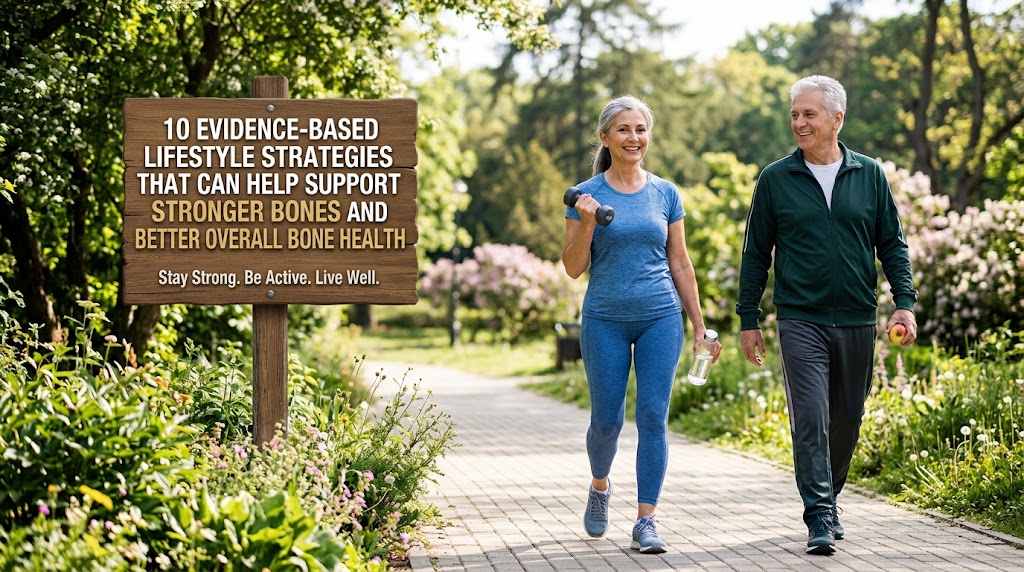
10 Evidence-Based Lifestyle Strategies That Can Help Support Stronger Bones and Better Overall Bone Health.
Click Here To Watch Video to Treat Osteoporosis Disease Naturally!..
Here are
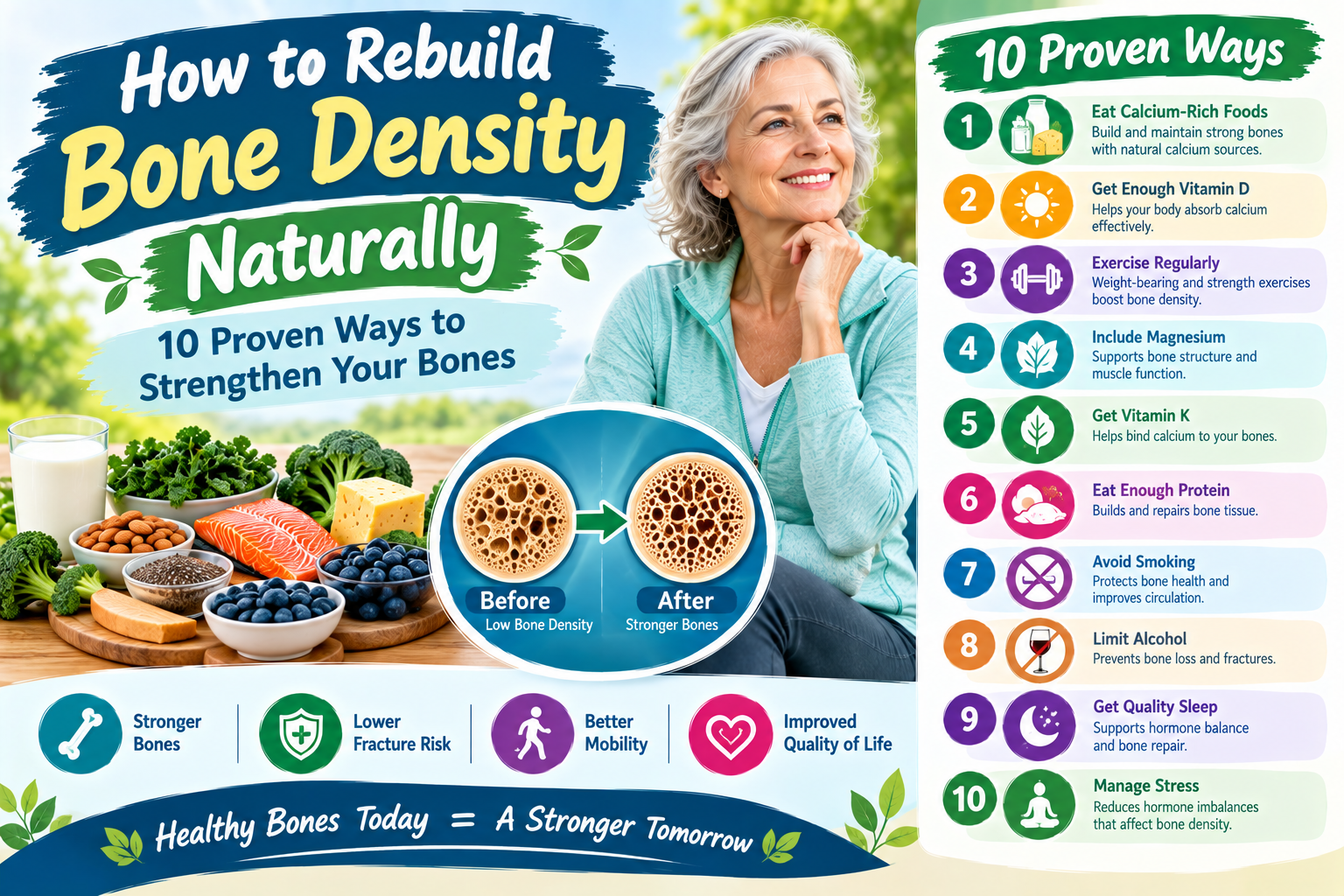
1. Eat Enough Calcium-Rich Foods
Calcium is one of the most important minerals for maintaining bone structure. Your skeleton stores most of the calcium in your body, and your body continually uses and replaces bone tissue.
Getting enough calcium through food is an important foundation for bone health.
Good calcium-rich foods include:
- Milk
- Yogurt
- Cheese
- Calcium-fortified plant beverages
- Calcium-set tofu
- Sardines with bones
- Canned salmon with bones
- Beans and lentils
- Some leafy green vegetables
- Calcium-fortified foods
Try to include calcium-rich foods throughout the day rather than relying on a single meal.
Calcium supplements may be appropriate for people who cannot meet their needs through diet, but more is not necessarily better. Excessive supplementation can cause unwanted effects and may interact with certain medications.
Talk with a healthcare professional before starting a calcium supplement, especially if you have kidney problems or take prescription medications.
2. Make Sure You Get Enough Vitamin D
Vitamin D plays an important role in calcium absorption and bone health. It also contributes to normal muscle function, which is particularly important because stronger muscles can improve stability and help reduce falls.
Sources of vitamin D include:
- Fatty fish
- Egg yolks
- Fortified milk
- Fortified plant beverages
- Fortified cereals
- Appropriate sunlight exposure
- Vitamin D supplements when recommended
Some people have a greater risk of inadequate vitamin D, including older adults and people who spend little time outdoors.
A healthcare professional may recommend a vitamin D blood test depending on your health history.
Avoid taking very high doses of vitamin D unless specifically recommended. Excessive intake can cause health problems.
3. Perform Weight-Bearing Exercise
Bones respond to physical stress. Weight-bearing activity places controlled stress on the skeleton and can help support bone strength.
Examples include:
- Walking
- Hiking
- Stair climbing
- Dancing
- Low-impact aerobics
- Certain recreational activities
Walking is an accessible starting point for many people. You can begin with short sessions and gradually increase your activity as your fitness and comfort improve.
If you already have osteoporosis or have experienced a fracture, ask your healthcare professional what types of weight-bearing exercise are appropriate.
Not every high-impact activity is safe for everyone with low bone density.
4. Add Resistance Training
Resistance exercise is another important part of a bone-health program.
Strength training challenges muscles and can help improve muscle strength, physical function, balance, and the ability to perform everyday activities.
Examples include:
- Resistance-band exercises
- Light dumbbells
- Sit-to-stands
- Wall push-ups
- Leg-strengthening exercises
- Weight machines
- Other supervised resistance exercises
Start with manageable resistance and focus on proper technique.
If you have osteoporosis, particularly osteoporosis affecting the spine, avoid exercises that involve forceful spinal bending or twisting unless a qualified professional has specifically determined that they are appropriate for you.
A physical therapist or qualified exercise professional can help create a safe program.
5. Eat Enough Protein
Protein is sometimes overlooked when people focus on calcium and vitamin D. However, maintaining adequate protein intake is important for muscles as well as overall physical health.
Muscle strength matters because stronger muscles can support mobility and balance, potentially helping reduce the likelihood of falls.
Protein-rich foods include:
- Eggs
- Fish
- Chicken
- Yogurt
- Milk
- Beans
- Lentils
- Tofu
- Nuts
- Seeds
Try to include a protein source in each major meal.
If you are older, recovering from a fracture, losing weight unintentionally, or have a medical condition affecting nutrition, discuss your protein needs with a healthcare professional or registered dietitian.
6. Maintain a Healthy Body Weight
Being significantly underweight can be associated with poorer bone health and increased fracture risk.
Extreme dieting, prolonged calorie restriction, and rapid weight loss may deprive the body of important nutrients needed for maintaining bones and muscles.
A balanced eating pattern should provide sufficient calories, protein, vitamins, minerals, and other nutrients.
If you are underweight, unintentionally losing weight, or struggling to eat enough, talk with a healthcare professional.
At the same time, maintaining a healthy weight should not mean following extreme diets. The goal is adequate nutrition and sustainable health habits.
7. Practice Balance and Fall-Prevention Exercises
Strong bones are important, but preventing falls is equally important when you have low bone density.
A fall can cause a fracture even when bone loss is moderate or severe.
Balance exercises can include:
- Heel-to-toe walking
- Supported single-leg standing
- Weight shifting
- Tai chi
- Controlled standing exercises
Always perform challenging balance exercises in a safe environment. Hold onto a stable support when necessary.
You can also make your home safer by:
- Removing loose rugs
- Keeping walkways clear
- Improving lighting
- Installing handrails
- Using bathroom grab bars
- Wearing supportive footwear
- Keeping frequently used objects within easy reach
Fall prevention is especially important for older adults and anyone with a history of fractures or balance problems.
8. Stop Smoking and Limit Excessive Alcohol
Lifestyle choices can have a significant effect on long-term bone health.
Smoking is associated with poorer bone health and increased fracture risk. If you smoke, quitting can benefit your bones as well as your heart, lungs, and overall health.
Excessive alcohol consumption can also negatively affect bone health and increase the likelihood of falls and injuries.
If you drink alcohol, keeping consumption within recommended limits is an important part of a bone-friendly lifestyle.
If quitting smoking is difficult, ask a healthcare professional about evidence-based cessation support.
9. Protect Your Spine and Use Safe Movement Techniques
People with osteoporosis, particularly those who have already experienced a vertebral compression fracture, should pay special attention to spinal movements.
Some movements can place excessive stress on weakened vertebrae. These may include forceful forward bending, repeated deep spinal flexion, aggressive twisting, and sudden jerking movements.
Instead, practice controlled movements during everyday activities.
For example:
- Bend at the hips and knees when appropriate rather than rounding the back.
- Keep objects close to your body when lifting.
- Avoid lifting loads that are too heavy.
- Use good posture while sitting and standing.
- Turn your whole body instead of aggressively twisting your spine.
A physical therapist can teach you spine-safe techniques for everyday tasks.
10. Monitor Your Bone Health and Treat Underlying Causes
Lifestyle changes are important, but rebuilding or maintaining bone density also requires understanding why bone loss occurred.
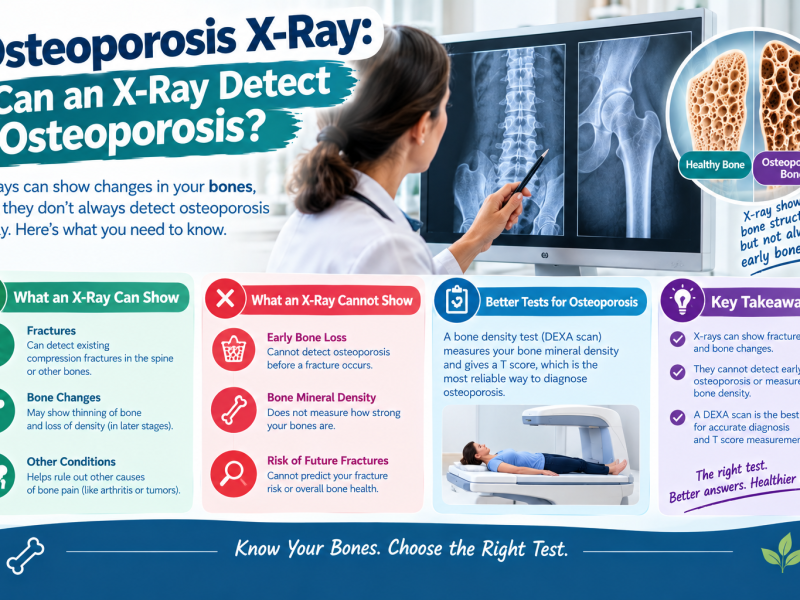
Your healthcare professional may recommend a bone density test such as a DXA or DEXA scan.
Other factors that may need attention include:
- Previous fractures
- Family history of osteoporosis
- Menopause and hormonal changes
- Long-term corticosteroid use
- Thyroid or parathyroid disorders
- Certain digestive conditions
- Kidney disease
- Low body weight
- Nutritional deficiencies
- Certain medications
If you have osteoporosis or a high risk of fracture, prescription treatment may be recommended.
Depending on individual circumstances, osteoporosis medications may include bisphosphonates, denosumab, selective estrogen receptor modulators, or bone-forming therapies.
These treatments can be particularly important for people who have already experienced fragility fractures or have significantly reduced bone density.
Natural approaches should therefore be viewed as part of a comprehensive bone-health strategy rather than a guaranteed replacement for medical treatment.
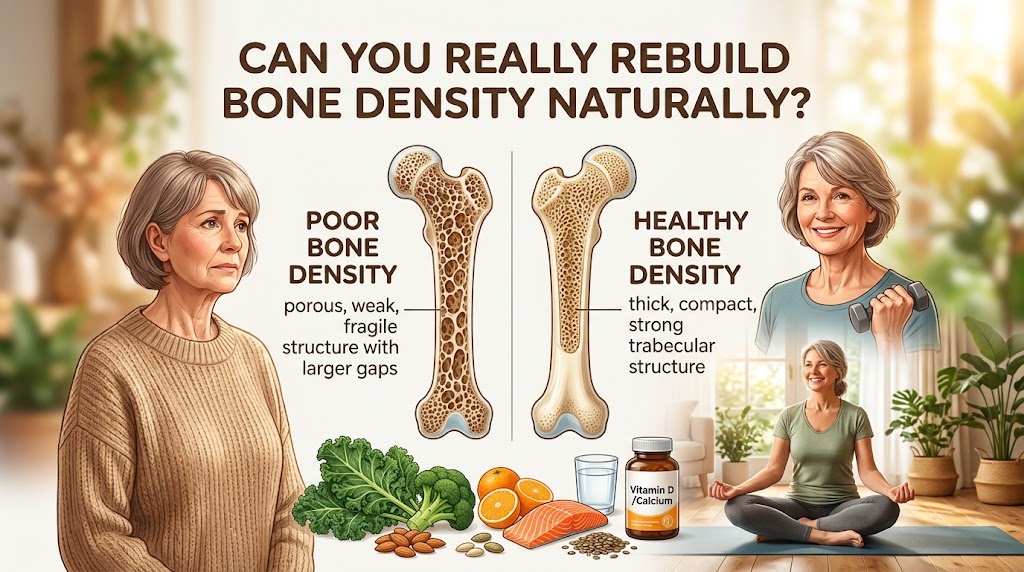
Can You Really Rebuild Bone Density Naturally?
Click Here To Watch Video to Treat Osteoporosis Disease Naturally!..
Bone is living tissue that continuously undergoes remodeling. The body removes older bone and replaces it with new bone.
Healthy habits can support this process, but the amount of bone density that can be regained varies from person to person.
Age, genetics, hormones, medications, medical conditions, nutritional status, exercise habits, and previous fractures can all affect the outcome.
For some people, lifestyle changes may help maintain bone density or produce measurable improvement. For others, especially those with established osteoporosis or a high fracture risk, medication may be necessary.
The most important goal is to create a long-term strategy that protects existing bone and reduces fracture risk.
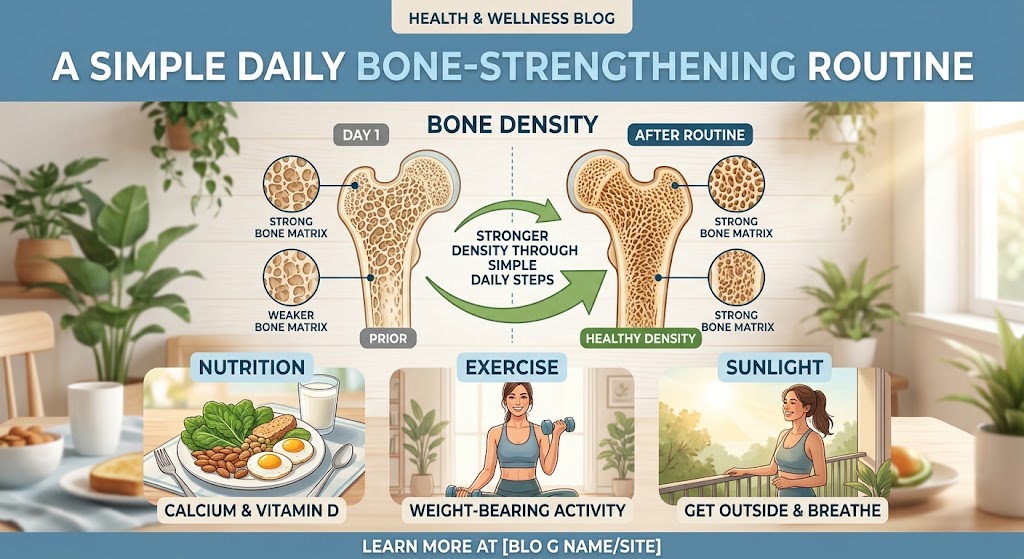
A Simple Daily Bone-Strengthening Routine
Click Here To Watch Video to Treat Osteoporosis Disease Naturally!..
A practical routine might look like this:
Morning:
Start with a balanced breakfast containing protein and a calcium-rich food.
During the day:
Walk or perform another appropriate weight-bearing activity.
Meals:
Include protein, vegetables, fruits, whole grains, and calcium-rich foods.
Exercise:
Perform an appropriate resistance-training routine several times each week.
Balance:
Practice safe balance exercises regularly.
Lifestyle:
Avoid smoking and limit excessive alcohol.
Evening:
Check your home environment for trip hazards and maintain safe movement habits.
Consistency is more important than trying to make dramatic changes overnight.
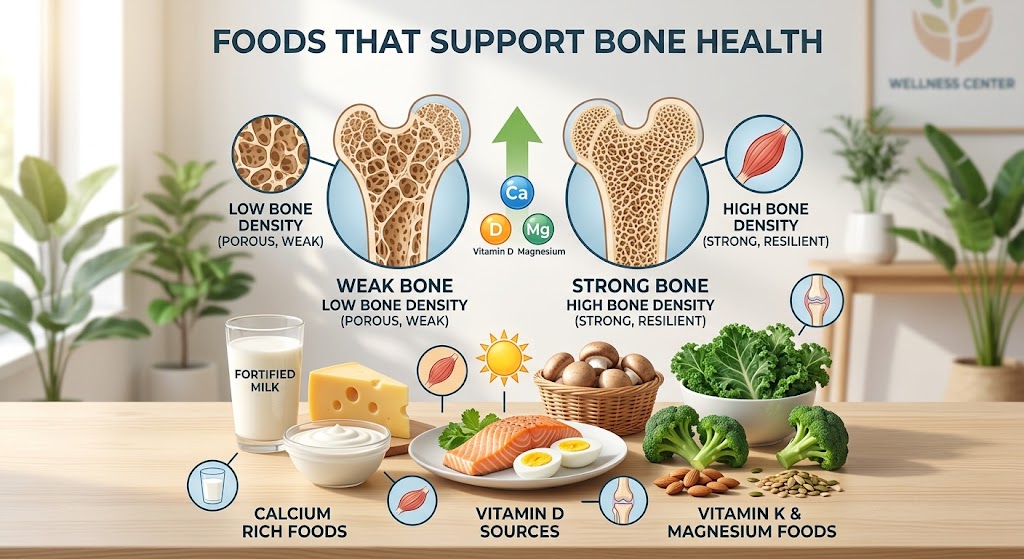
Foods That Support Bone Health
Click Here To Watch Video to Treat Osteoporosis Disease Naturally!..
A bone-friendly eating pattern can include:
- Dairy products
- Fortified plant beverages
- Leafy vegetables
- Beans and lentils
- Tofu
- Sardines
- Canned salmon
- Eggs
- Fatty fish
- Nuts and seeds
- Fruits
- Whole grains
A varied diet is preferable to relying on one “superfood” or supplement.
Remember that no single food can rebuild osteoporosis-damaged bone by itself.
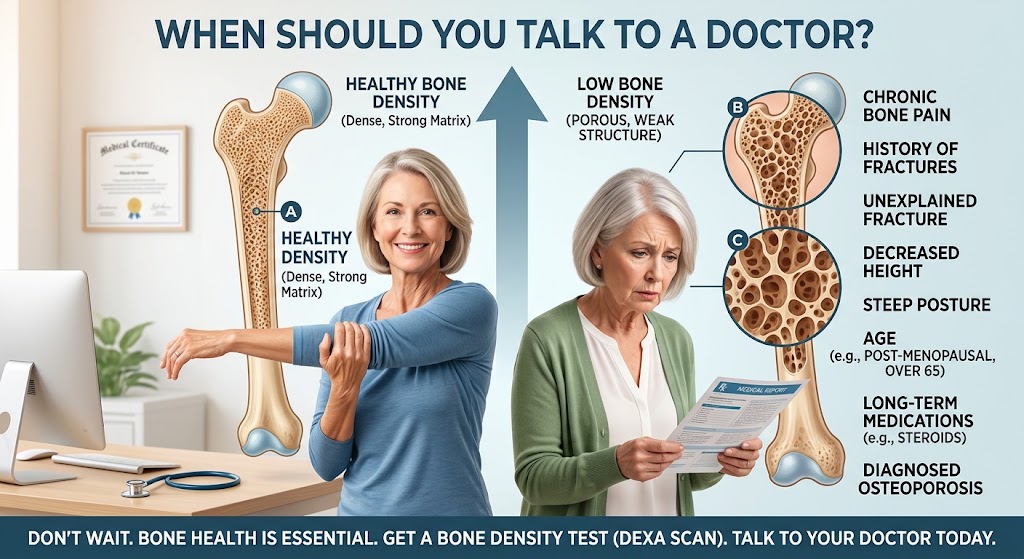
When Should You Talk to a Doctor?
Click Here To Watch Video to Treat Osteoporosis Disease Naturally!..
Seek professional advice if you have:
- A previous fracture from a minor fall
- Persistent or unexplained back pain
- Loss of height
- Increasing stooped posture
- Low bone density
- A family history of osteoporosis
- Long-term corticosteroid use
- Frequent falls
- Significant weight loss
- Difficulty maintaining adequate nutrition
A healthcare professional can determine whether you need a DXA scan, laboratory testing, medication, physical therapy, or other interventions.
Final Thoughts
Rebuilding bone density naturally is best approached as a long-term commitment to better nutrition, exercise, muscle strength, fall prevention, and healthy lifestyle habits.
The 10 most important strategies are eating enough calcium, maintaining adequate vitamin D, performing weight-bearing activity, doing resistance training, getting enough protein, maintaining a healthy weight, practicing balance exercises, avoiding smoking, limiting excessive alcohol, and monitoring your bone health.
These strategies can support stronger bones and help protect against fractures. However, osteoporosis is a medical condition, and lifestyle changes alone may not be sufficient for everyone.
If you have osteoporosis or have already experienced a fragility fracture, work with a qualified healthcare professional to develop a personalized treatment plan.
Medical Disclaimer: This article is intended for general educational purposes and does not replace professional medical diagnosis, treatment, or advice. Talk with your healthcare professional before beginning a new exercise program, taking supplements, or changing prescribed osteoporosis treatment, particularly if you have osteoporosis, a recent fracture, or another medical condition.