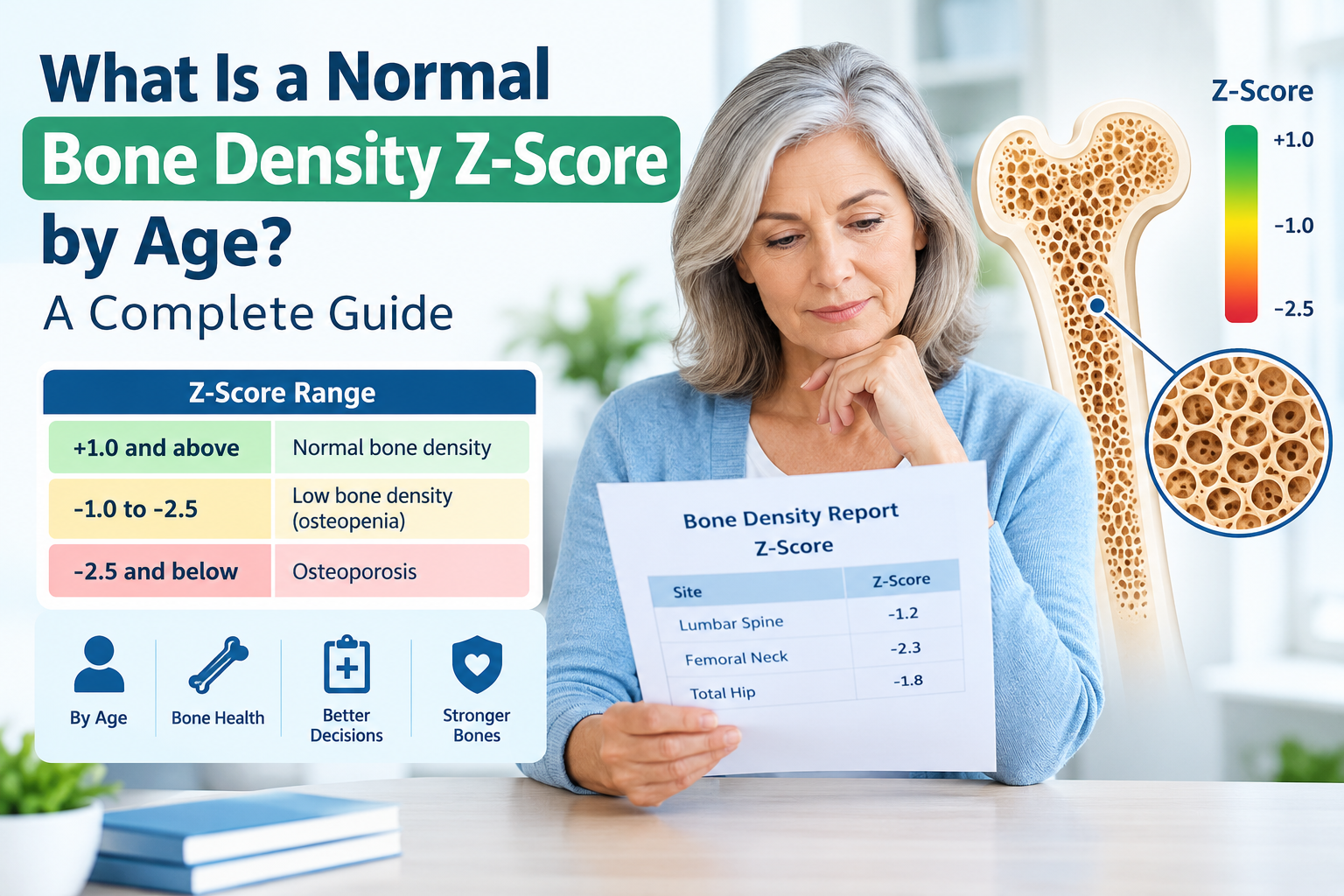
If you have undergone a bone density test, you may have noticed a number called a Z-score on your report. Understanding this result can help you learn whether your bone density is typical for people of a similar age and sex.
But what is a normal bone density Z-score by age? Is a score of zero good? What does a negative score mean, and when should you be concerned?
In this complete guide, we explain bone density Z-scores, how doctors interpret them, how they differ from T-scores, and what you can do to support healthy bones at every age.
Medical note: This article provides general educational information and is not a substitute for professional medical advice.
1. What Is a Bone Density Z-Score?
Click Here To Watch Video to Treat Osteoporosis Disease Naturally!..
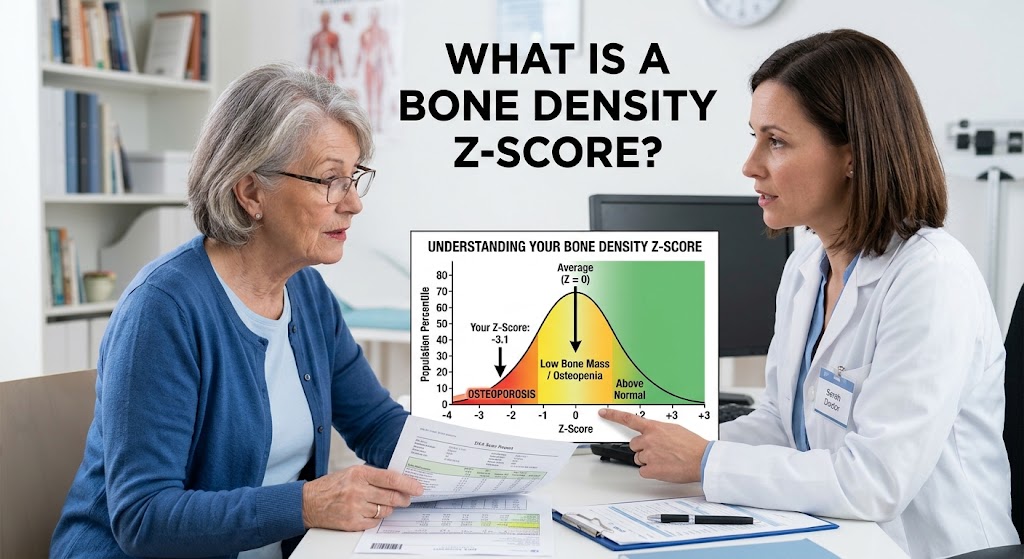
A bone density Z-score is a measurement used to compare your bone mineral density (BMD) with the average bone density of people of similar age, sex, and, depending on the reference system, other characteristics.
Bone mineral density describes the amount of mineral contained in a specific area of bone. It is commonly measured using a dual-energy X-ray absorptiometry scan, known as a DXA or DEXA scan.
Your Z-score indicates how far your measured bone density is above or below the average for the reference group, expressed in standard deviations.
For example:
-
Z-score of 0.0: Your bone density is approximately equal to the reference average.
-
Z-score of +1.0: Your bone density is one standard deviation above the reference average.
-
Z-score of −1.0: Your bone density is one standard deviation below the reference average.
-
Z-score of −2.0: Your bone density is two standard deviations below the reference average.
A Z-score is not a direct measurement of fracture risk, and it does not diagnose osteoporosis on its own.
Understanding a Z-score
Illustrative scale showing how your result compares with the reference average.
+1.0
Above average
0.0
Average
−1.0
Below average
−2.0
Much lower than expected
These are illustrative examples, not separate diagnostic categories at every value.
2. What Is a Normal Bone Density Z-Score by Age?
Click Here To Watch Video to Treat Osteoporosis Disease Naturally!..
A common question is whether bone density Z-scores have different normal ranges for people in their 20s, 40s, 60s, or 80s.
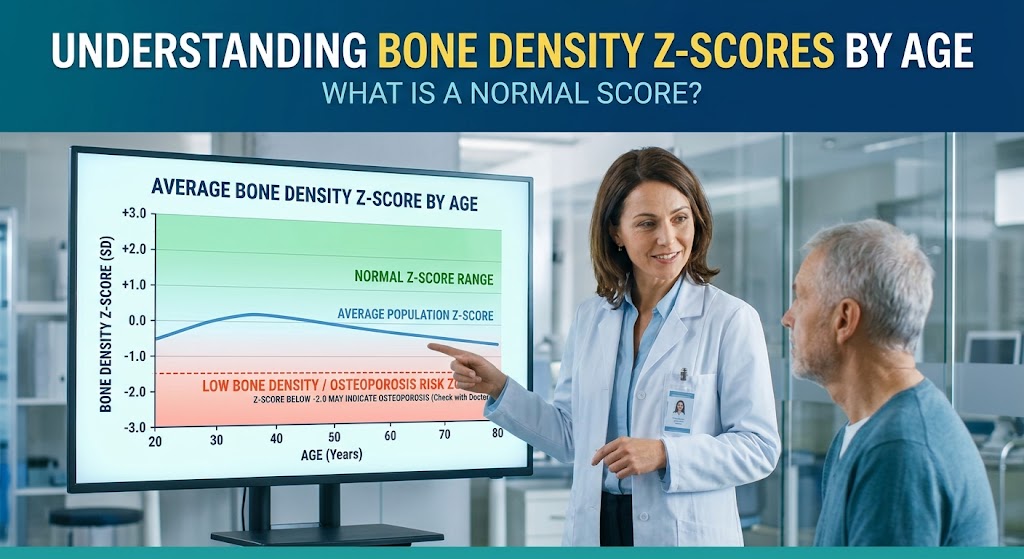
The important distinction is that a Z-score already compares your result with an age-matched reference group. Therefore, the expected average Z-score is approximately zero at every age when the appropriate reference population is used.
There is no universal rule that everyone over 60 should have a particular negative Z-score. Your actual bone density in grams per square centimeter may change with age, but your Z-score expresses how it compares with similar people in the reference database.
The following table provides a general guide.
| Age group | How to understand the Z-score |
|---|---|
| Children and teenagers | Compare with appropriate pediatric reference data; growth and development matter. |
| Adults aged 20–39 | A score near 0 is around the reference average for comparable adults. |
| Adults aged 40–49 | A score near 0 is around the age-matched average. |
| Adults aged 50–59 | A score near 0 remains around the age-matched average; clinical context matters. |
| Adults aged 60–69 | A score near 0 indicates bone density around the age-matched average. |
| Adults aged 70–79 | A score near 0 indicates bone density around the age-matched average. |
| Adults aged 80 and older | A score near 0 indicates bone density around the age-matched average, using an appropriate reference. |
These descriptions explain the meaning of the score rather than providing separate age-specific clinical thresholds. Actual interpretation depends on the scan site, reference database, and clinical circumstances.
What Z-score is considered normal?
For most children, premenopausal women, and men younger than 50, a Z-score above −2.0 is generally described as within the expected range for age.
A Z-score of −2.0 or lower is described as below the expected range for age.
This is an important clinical distinction. A result below −2.0 does not automatically mean you have osteoporosis, but it may prompt your healthcare professional to investigate possible underlying causes.
For example, a 35-year-old with a Z-score of −2.3 may need an assessment for factors affecting bone health, such as nutritional deficiencies, medication effects, or hormonal disorders.
By contrast, an older adult’s bone health is often evaluated using a T-score and overall fracture risk, not the Z-score alone.
3. What Is the Difference Between a Z-Score and a T-Score?
Although both scores come from bone density testing, they compare your results with different reference groups.
| Feature | Z-score | T-score |
|---|---|---|
| Comparison | People of similar age and sex | Healthy young-adult reference population |
| Main purpose | Identifies whether bone density is unusually low for age | Helps classify bone density and assess osteoporosis |
| Common use | Children, premenopausal women, and men under 50 | Postmenopausal women and men aged 50 or older |
| Important threshold | −2.0 or lower is below the expected range for age | −2.5 or lower may meet the densitometric criterion for osteoporosis in appropriate adults |
These distinctions follow guidance from the International Society for Clinical Densitometry (ISCD) and the U.S. National Institute of Arthritis and Musculoskeletal and Skin Diseases (NIAMS).
Example of how the scores differ
Imagine a 65-year-old woman whose bone density is lower than that of a healthy 30-year-old but similar to the average for her age.
Her T-score might be negative because it compares her bones with those of younger adults. However, her Z-score could be close to zero because it compares her bones with those of people of similar age.
This is why a negative Z-score does not automatically mean osteoporosis. Your doctor must interpret the appropriate score alongside your medical history and fracture risk.
4. What Does a Low Bone Density Z-Score Mean?
A low Z-score means that your bone density is lower than expected for people in the reference group.
According to the ISCD, a Z-score of −2.0 or lower is classified as below the expected range for age. This result may prompt further evaluation, particularly in younger adults.
Possible explanations include the following.
1. Calcium or vitamin D deficiency
Calcium is essential for bone structure, while vitamin D helps the body absorb calcium. Inadequate intake, poor absorption, or other nutritional problems can contribute to reduced bone mineralization.
2. Hormonal changes
Low estrogen levels, reduced testosterone, and certain thyroid or parathyroid disorders can affect bone metabolism.
3. Medical conditions
Conditions such as celiac disease, inflammatory bowel disease, and some kidney disorders may interfere with nutrient absorption or normal bone metabolism.
4. Medications
Long-term use of certain medications, particularly glucocorticoids such as prednisone, can contribute to bone loss. Other medicines may also affect bone health.
5. Low body weight or inadequate nutrition
Being underweight, experiencing substantial weight loss, or not consuming enough calories and protein may affect bone development and maintenance.
6. Limited physical activity
Bones respond to mechanical loading. Inadequate weight-bearing activity, prolonged immobility, and certain chronic illnesses may contribute to reduced bone density.
A low Z-score is a reason to investigate, not a reason to assume that you have a specific disease. Your clinician may recommend blood tests, a review of medications, nutritional assessment, or additional investigations depending on your circumstances.
5. How Is Bone Density Z-Score Measured?
Click Here To Watch Video to Treat Osteoporosis Disease Naturally!..
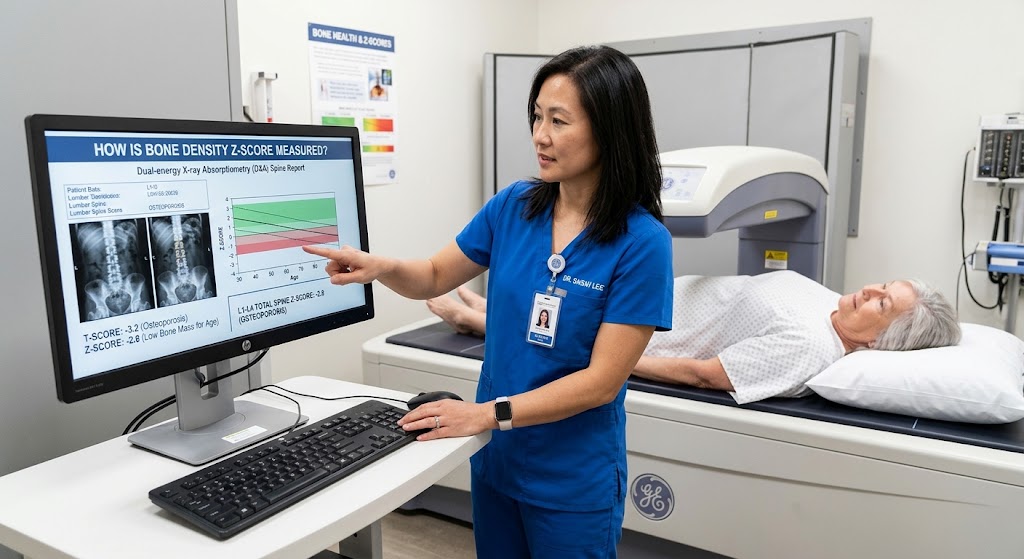
The most common method for measuring bone mineral density is a DXA scan. This quick, noninvasive test uses a low dose of X-rays to measure bone density, usually at the hip and lumbar spine.
Here is what to expect:
-
Preparation: Follow the imaging center’s instructions. Tell the staff if you may be pregnant, take calcium supplements, or recently had certain contrast examinations.
-
Positioning: You lie on a padded examination table while the scanner moves over the area being assessed.
-
Measurement: The machine estimates bone mineral density at the selected sites.
-
Comparison: The result is compared with an appropriate reference database to calculate your score.
-
Interpretation: A healthcare professional reviews the results alongside your age, sex, medical history, and fracture history.
Your report may contain separate measurements for the lumbar spine, femoral neck, and total hip. Scores can differ between these sites, so one result should not automatically be assumed to represent your entire skeleton.
Children require particular care because bone size, height, growth, and maturation affect interpretation. Pediatric assessments may need adjustments for short stature or delayed growth.
6. How Can You Improve or Maintain Bone Density at Different Ages?
Click Here To Watch Video to Treat Osteoporosis Disease Naturally!..
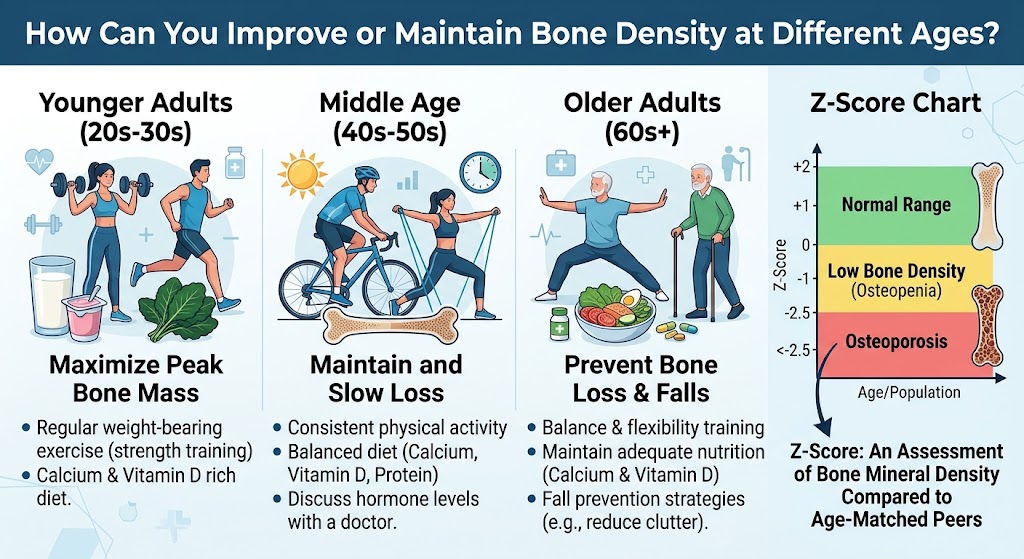
Your needs change throughout life, but several habits can help support healthy bones.
During your 20s and 30s
These years are important for building and maintaining bone strength.
-
Eat a balanced diet containing adequate calcium and protein.
-
Get sufficient vitamin D through appropriate dietary sources, sunlight exposure, or supplements when recommended.
-
Participate in regular weight-bearing activities, such as walking, jogging when suitable, dancing, or resistance training.
-
Avoid smoking and excessive alcohol consumption.
-
Seek medical advice if you experience unexplained fractures or have a condition that affects nutrient absorption.
During your 40s and 50s
Bone loss may become more noticeable, especially during the menopausal transition.
-
Continue strength and weight-bearing exercises.
-
Discuss hormonal changes and personal fracture risks with your healthcare professional.
-
Review medications that may affect bone health.
-
Ask whether a bone density test is appropriate based on your risk factors.
After age 60
Maintaining bone strength and preventing falls become increasingly important.
-
Include safe strength, balance, and weight-bearing exercises.
-
Keep walkways clear and improve lighting at home.
-
Review vision, footwear, and medicines that may increase fall risk.
-
Discuss bone density screening and treatment options with your healthcare professional.
Calcium and vitamin D needs vary by age and individual circumstances. Supplements are not automatically necessary for everyone, and excessive doses may cause harm. A clinician can help determine whether supplementation is appropriate.
7. When Should You Be Concerned About Your Z-Score?
Click Here To Watch Video to Treat Osteoporosis Disease Naturally!..
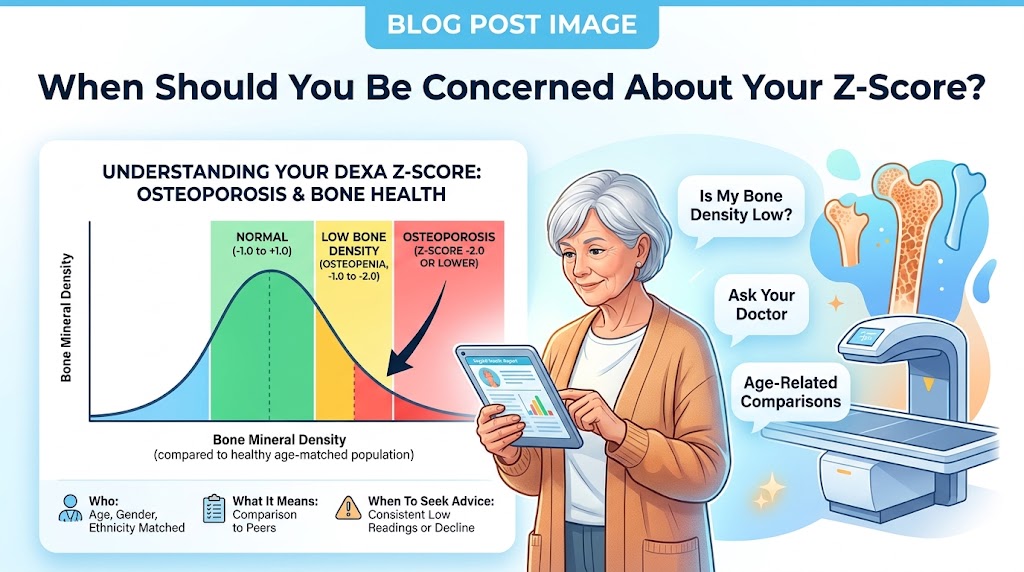
You should discuss your results with a healthcare professional if your Z-score is −2.0 or lower, especially if you are a younger adult or have other risk factors for bone loss.
Medical evaluation is particularly important if you have:
-
Experienced a fracture after a minor fall or relatively little trauma.
-
Lost height unexpectedly or developed persistent back pain.
-
A family history of osteoporosis or hip fractures.
-
A condition that affects nutrient absorption or hormone levels.
-
Taken medications associated with bone loss for an extended period.
-
Experienced unexplained weight loss or significant nutritional deficiencies.
Your doctor may recommend additional tests or a specialist assessment. In children and teenagers, a low Z-score must be interpreted alongside growth, fracture history, and other clinical findings. Bone density results alone are not sufficient to diagnose pediatric osteoporosis.
8. Frequently Asked Questions About Bone Density Z-Scores
Is a Z-score of 0 good?
Yes. A Z-score of 0 indicates that your bone density is approximately equal to the average for the reference group. It does not guarantee that your bones are free from disease or that your fracture risk is zero.
Is a Z-score of −1.5 normal for my age?
For most children, premenopausal women, and men younger than 50, a Z-score of −1.5 is still within the expected range for age under ISCD criteria. However, your healthcare professional should consider other risk factors and clinical findings.
Does a Z-score of −2.0 mean osteoporosis?
Not necessarily. A Z-score of −2.0 or lower indicates bone density below the expected range for age. It does not independently establish an osteoporosis diagnosis in most adults. The interpretation differs for children and older adults.
Can a Z-score improve?
Yes, it can change over time. Improvements in bone density may occur with appropriate nutrition, exercise, treatment of underlying medical conditions, and prescribed medication when necessary. However, changes are not guaranteed, and small differences between scans may reflect measurement variability.
Is a Z-score more important than a T-score after age 65?
Not usually. For postmenopausal women and men aged 50 or older, T-scores are generally preferred for bone density classification. A Z-score may still provide useful additional information when a clinician suspects an underlying cause of bone loss.
Conclusion
A normal bone density Z-score is generally one that falls within the expected range for people of similar age and sex. A score close to zero represents the reference average, while a score of −2.0 or lower is considered below the expected range for age in the groups for whom Z-scores are preferred.
The most important point is that there is no separate universal normal Z-score for every age group. Your result must be interpreted using the appropriate reference data, the body site measured, your medical history, and your overall fracture risk.
If your report shows a low Z-score, do not panic. Discuss the result with your healthcare professional to determine whether additional testing or treatment is appropriate. A balanced diet, adequate calcium and vitamin D, regular suitable exercise, and attention to underlying medical conditions can all help support long-term bone health.